
Reviewed · TAHITI
4 Hours of Humpback Whale Watching in Tahiti
Tahiti’s humpback whale trip is built around patience, good guiding, and respect for wild animals. You spend about four hours at sea searching for whales, first watching from the boat, then possibly entering the water if the whales and ocean conditions allow it.
I like the small maximum group of 12, which gives the naturalist guides room to explain behavior and help you spot blows, tails, and swimming whales. I also like the hydrophone, a fine touch that lets you listen for whale song instead of simply staring at the horizon.
The main drawback is simple: nothing is guaranteed. You might see a mother and calf, or only distant blows after a long search. Snorkeling is an optional part of the outing, not a promise, and the guide can cancel a launch for rough seas, sharks, or whale behavior.
Key points to know before booking
- Four hours on the ocean: Plan for a full half-day, with time spent searching rather than moving between fixed sightseeing stops.
- Small-group setting: The spacious boat carries no more than 12 people, giving you a better chance to hear the guide and move around for views.
- Boat viewing comes first: Every whale encounter begins from the boat. Water entry depends entirely on safety and animal welfare.
- Experienced guides: Luo, Julien, Lulu, Bastien, and the captain have received especially warm praise for clear explanations, patience, and help with sightings and photographs.
- Snorkeling experience required: Children under 10 watch from the boat only. Adults entering the water must already be comfortable snorkeling.
- A conservation-minded outing: The team follows approach rules, works with local cetacean conservation groups and marine biologists, and carries a hydrophone for whale song.
Meeting the whales off Puna’auia
The trip starts at C97M+HW in Puna’auia and returns to the same meeting point. The location is useful to confirm carefully before leaving your hotel, since the provided meeting information is a map code rather than a conventional street address.
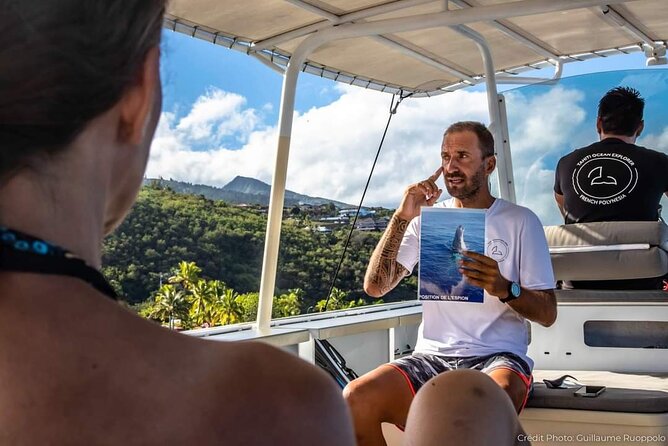
Once aboard, the naturalist guide gives a briefing about humpback whales, their behavior, and the rules for approaching them. This opening matters. A good whale trip is not simply a race to find an animal. You need to understand why the boat may stop at a distance, wait quietly, or leave a group alone.
I like the way the operation puts the guide in charge of every decision. The person leading the outing, not the customers, decides if the boat can approach and if anyone can enter the water. That keeps excitement from pushing safety or animal welfare aside.
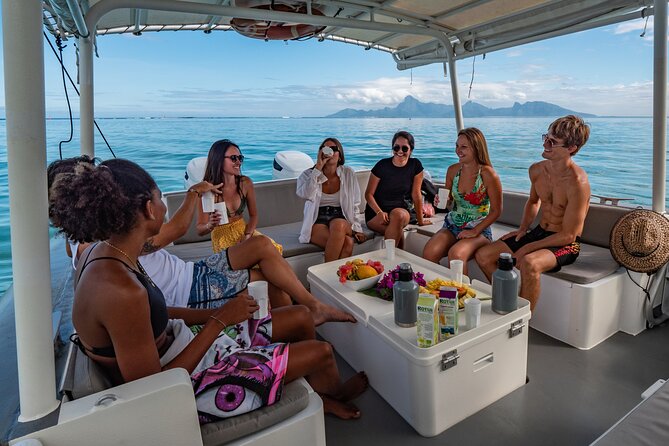
The boat is described as spacious, which is valuable during a four-hour search. You will want room to look in different directions, shift position when a whale surfaces, and return to the guide for explanations. A smaller group also makes it easier to ask questions without turning the trip into a crowded lecture.
Other chances to meet the humpbacks in Tahiti:
- Respectful whale excursion to Tahiti in 4h30
★ 4.5 · 123 reviews - Tahiti island: Whale watching Experience
★ 4.2 · 79 reviews - Guided Small Group Whale Watching and Swim Tour Tahiti
★ 5.0 · 57 reviews
Searching the ocean for four hours
There is no set chain of attractions here. The main activity is searching open water for signs of whales. You may watch the horizon, follow a distant blow, wait for a fluke, and then adjust position as the animals move.
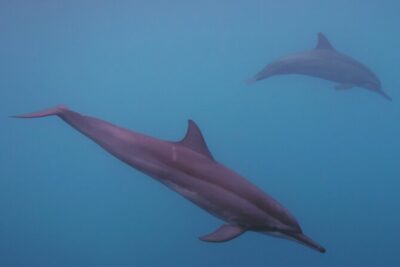
That lack of a fixed schedule is part of the appeal, but it can test your patience. A whale may surface only briefly, and the crew cannot control where it appears. You might see dolphins, other cetaceans, or sea turtles during the search, though these encounters are also not assured.
I would treat the four-hour duration as useful search time, not four hours of continuous whale viewing. Some outings produce close and memorable encounters with a mother and calf, while another may result in only a few blows, a tail, or a distant whale swimming. Nature sets the timetable.
The sea can also be choppy. If you are prone to motion sickness, think carefully about spending half a day on open water, even though the boat is spacious. The description calls for a moderate level of physical fitness, so you should be comfortable aboard a moving boat and able to manage basic activity at sea.
What the guides add to the outing
The strongest part of this experience appears to be the guiding. Luo is praised for being friendly, explaining whale behavior clearly, and helping people get good sightings and photographs. Julien, Lulu, and Bastien are also named in particularly warm accounts, along with the captain.
That personal help matters because whale watching can be frustrating without context. A guide can tell you what a blow means, explain a change in direction, and point out behavior you might miss on your own. You may look at the same patch of sea as everyone else and see nothing, then suddenly spot a tail because the guide has read the animal’s movement.
The guides also handle the difficult judgment calls. A whale may be close enough to see but not suitable for a water encounter. The sea may look manageable from the boat while currents or swell make snorkeling unsafe. The guide’s decision is final, and that is exactly how it should be.
The experience works well for people who want more than a quick wildlife sighting. You get natural-history information, an explanation of the local environment, and a chance to understand why respectful distance is important. The tone is educational without requiring you to be an expert.
The hydrophone and the value of listening
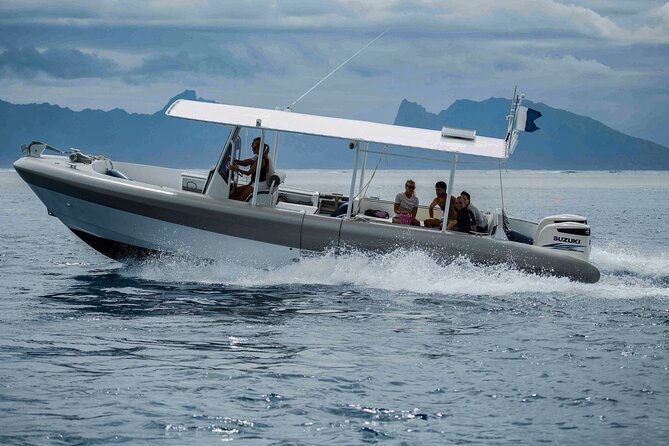
The boat carries a hydrophone, allowing you to listen for whale song. This gives the trip another layer. Whale watching often becomes a visual hunt, but sound can make the ocean feel active even when the surface is calm.
You should not assume the hydrophone will produce a song on every outing. The equipment is available, but whales control the moment. Still, it is a worthwhile feature because it connects you to animals that may be below the surface or out of sight.
The conservation work adds meaning without changing the trip into a research expedition. The company works with local cetacean conservation associations and marine biologists, with observations intended to support scientific knowledge. For you, that means the guide can place the encounter in a larger context: what the team sees, how animals are approached, and why certain limits exist.
I value that approach. A whale trip should leave you with better memories, not with the feeling that a wild animal was pushed into performing for a boat.
Same island, a completely different day:
- Crossing Island of Tahiti 4×4 Mountain, Waterfall, River, Basins
★ 4.5 · 532 reviews - Découvrez le Mana durant la traversée de Tahiti en 4×4 Safari
★ 5.0 · 456 reviews - Crossing Over Tahiti Island Safari 4×4
★ 4.5 · 307 reviews - Private Island Tour ( 5 HOURS)
★ 5.0 · 216 reviews
Boat viewing comes before snorkeling
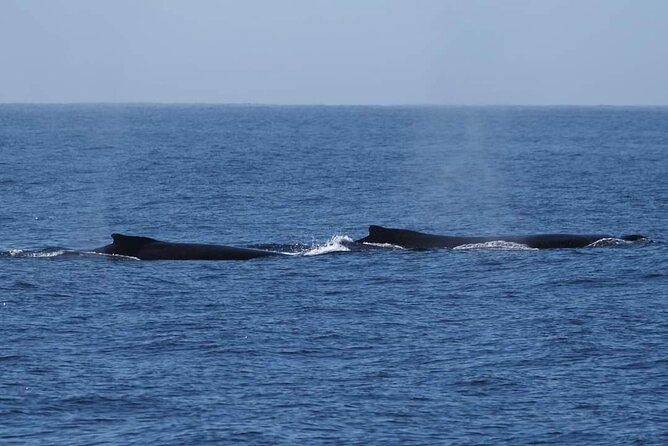
Every outing begins with whale watching from the boat. This is the dependable part of the format, though even boat sightings cannot be promised. If the whales remain calm, the water is suitable, and the guide approves, you may then observe them while snorkeling.
You must already have snorkeling experience to take part in a launch. This is not the place to learn basic water skills for the first time. You need to be comfortable in the sea, able to follow instructions, and prepared to remain calm around large animals and changing conditions.
The wording matters: water observation is possible, not automatic. The guide may keep everyone aboard because the whales are moving too quickly, the sea is rough, the approach would be too close, or another animal creates a risk.
One outing encountered five large predatory sharks circling the boat, so no one entered the water. That is a disappointment if you have paid for the possibility of snorkeling, but it is also a clear example of the right decision. Boat viewing is the safer core of the experience, while snorkeling is an added opportunity.
Children under 10 are limited to observation from the boat. The child rate applies to them, but they do not take part in water observation. Families should make that clear before booking, especially if a child expects to swim with whales.
The moments you might see
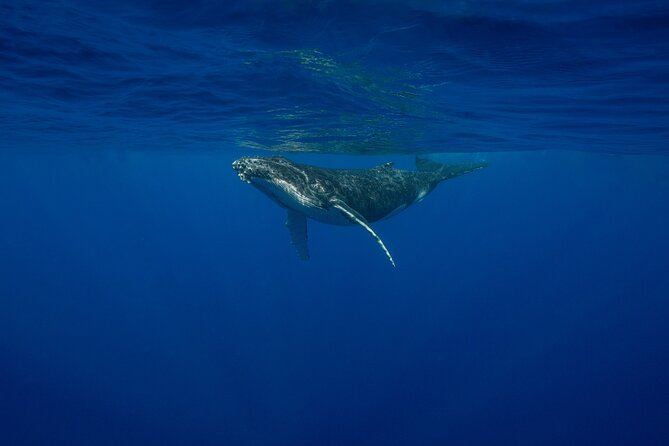
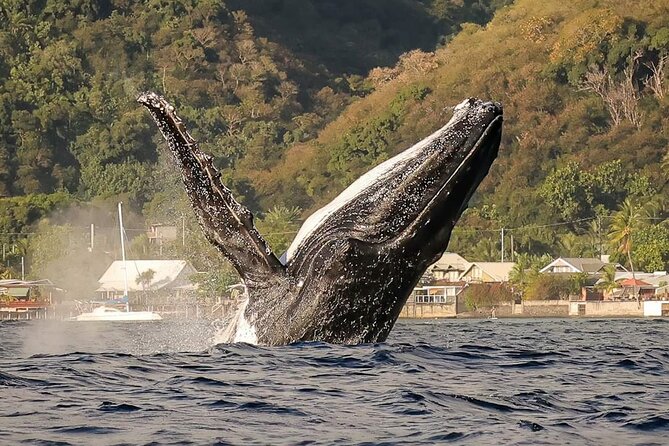
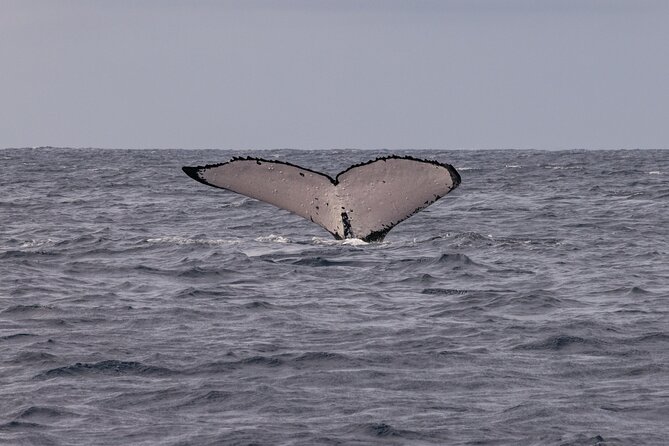
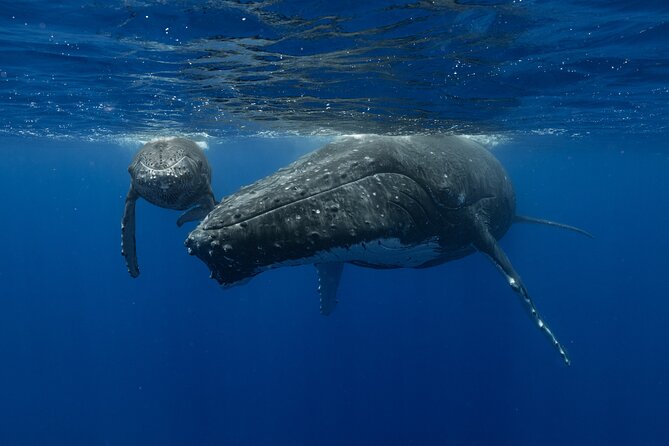
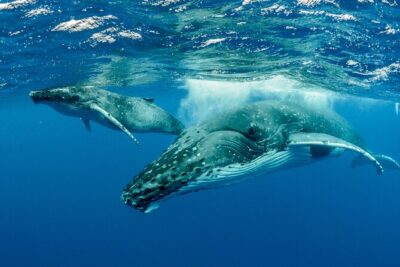
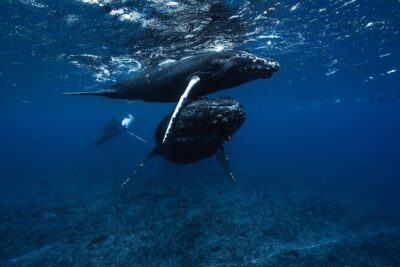
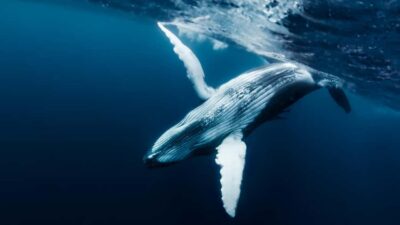
The best encounters can be remarkably intimate without requiring a water launch. A mother and calf may remain near the boat, or a small group may surface close enough for clear views. You might see a blow, a back, a tail, or a whale traveling beneath the surface.
A close encounter is never promised, and a distant sighting can still be meaningful. One account describes a late-season trip with only a few blows, swimming whales, and a tail, yet the crew kept searching and continued explaining what was happening. That persistence is important.
I would bring realistic expectations. If your goal is a guaranteed close photograph or a guaranteed swim, this is the wrong kind of activity. If you are happy to spend time looking, listening, learning, and accepting the rules of wild animals, the experience makes more sense.
The possibility of dolphins, other cetaceans, and sea turtles is a pleasant extra. Do not book it as a general marine-life guarantee, though. The central purpose remains humpback whale watching.
Price and value at $127.54
At $127.54 per person, this is not a casual harbor ride. You are paying for roughly four hours, a small group capped at 12, specialized naturalist guiding, a spacious boat, and equipment such as the hydrophone.
The value depends on how you measure success. If you need a close whale encounter every time, the price may feel high when weather, distance, or animal behavior limits the outing. No operator can honestly guarantee wildlife, and the tour makes that clear.
I think the price is more defensible for people who value responsible wildlife watching. The team follows approach rules, gives the guide authority to stop an interaction, and works with conservation groups and marine biologists. Those practices may reduce the chance of a dramatic encounter, but they protect the animals and keep the experience credible.
The small group also matters. Twelve is not private, but it is far more manageable than a large boat full of people competing for the same view. You have a better chance of hearing the guide, asking questions, and finding a useful position on deck.
Who will enjoy this Tahiti whale trip
I would recommend this outing to adults and older children who enjoy wildlife and can accept uncertainty. It suits you especially well if you want a guide-led experience rather than simply hiring a boat and hoping for a sighting.
It is also a good choice if you want to learn. The naturalist guides explain the animals and their environment, interpret behavior, and describe why an approach or launch is allowed or refused. That turns waiting into part of the experience.
You should think twice if you dislike rough water, need a fixed schedule, or are booking mainly for a guaranteed swim. The trip requires moderate physical fitness, and snorkeling participants must already have experience.
Families can still enjoy it, but children under 10 remain boat observers. Anyone hoping to enter the water needs to understand that the final call belongs to the guide, not to the booking.
Practical details that affect your choice
Confirmation is sent within 48 hours of booking, subject to availability. The activity is near public transportation, and it begins and ends at the Puna’auia meeting point.
You can cancel for a full refund up to 24 hours before the local start time. Changes or cancellations inside that window are not accepted for a refund. The trip requires suitable weather and a minimum number of participants, so a cancellation by the operator can lead to another date, another experience, or a full refund.
The mobile ticket is convenient, but I would still save the meeting code and allow time to find C97M+HW. A map code is precise when entered correctly, yet less helpful if you are trying to ask for directions by street name.
Should you book this whale-watching experience?
Book it if you want a careful, guide-led search with a real chance of seeing Tahitian humpback whales, plus the added possibility of listening to whale song and snorkeling when conditions permit. The small group, spacious boat, conservation focus, and strong guiding from people such as Luo, Julien, Lulu, and Bastien give it solid value.
Skip it if you need certainty. Sightings, close approaches, and water launches are never guaranteed, and a four-hour search may include plenty of waiting. For the right person, that patience is the point: you are entering the whales’ world, where the best moment arrives on its own schedule.
FAQ
How long is the humpback whale tour?
The experience lasts approximately four hours.
Where does the activity start and finish?
It starts at C97M+HW in Puna’auia, French Polynesia, and returns to the same meeting point.
Is snorkeling with the whales guaranteed?
No. Whale watching begins from the boat, and entering the water depends on whale behavior and sea conditions. The naturalist guide makes the final decision.
Do I need snorkeling experience?
Yes. Snorkeling experience is mandatory for anyone taking part in water observation.
Can children join the tour?
Yes. The child rate applies to children under 10, but children in that age group can observe only from the boat.
What happens if the weather is poor or the minimum group size is not reached?
You will be offered another date or experience, or a full refund. The same applies if the activity is canceled because of poor weather or an insufficient number of participants.
Just added around Tahiti
- Small group snorkeling (5 people max): wrecks & tropical fishes at 3:30pm★ 5.0 · 7 reviews
- Whale Watching Activity★ 5.0 · 8 reviews
- Wholesale Fishing in Poti Marara at Tahiti Teahupoo Peninsula★ 5.0 · 4 reviews
- Taxi Boat to Watch the Teahupoo International Surfing Competition★ 4.5 · 13 reviews
- Teahupoo Wave Watching★ 4.5 · 44 reviews
- Small group snorkeling (5 people max): Turtles at 7:30am★ 5.0 · 40 reviews
- Sunset Cruise in Tahiti★ 4.5 · 6 reviews
- SURF TAHITI Bites & Waves – Surf experience with every bite★ 5.0 · 7 reviews
Whale Watching, compared.
Swimming with Whales in Moorea (Half Day tour)
Read our review →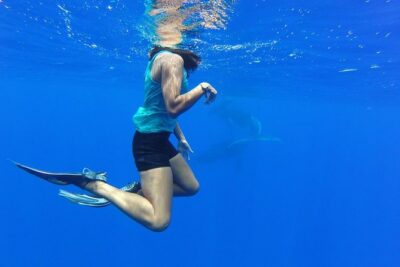
Humpback whale watching and marine life in Moorea
Read our review →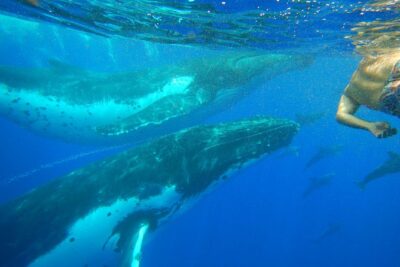
Private tour observing and swimming with humpback whales in Moorea
Read our review →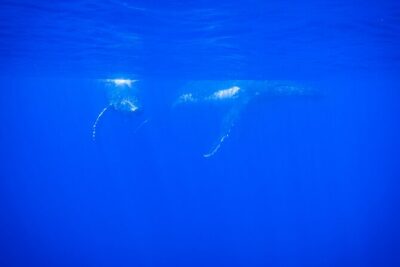
Browse the lists this tour appears in