
Reviewed · TAHITI
Crossing Over Tahiti Island Safari 4×4
Tahiti’s best scenery is not always beside the coastal road. This 8-hour 4×4 journey into Papenoo Valley takes you through the island’s central crater, across streams, past waterfalls, and into thick rainforest where ordinary rental cars cannot go. You see Tahiti from inside the island, not just from its beaches.
I like two things right away: the chance to reach remote mountain country without arranging a private expedition, and the guides’ personal touch. Noah, Hotu, Eric, Pito Augustin, Sydney, and Tady are among the guides praised for their driving, plant knowledge, local stories, jokes, music, and care with passengers.
The catch is simple: this is a rough ride. You may be bounced around for hours on unpaved roads, and the lunch stop can feel too long. If you have back problems, dislike jolting vehicles, or want a gentle sightseeing day, think carefully before booking.
Key points to know before you book
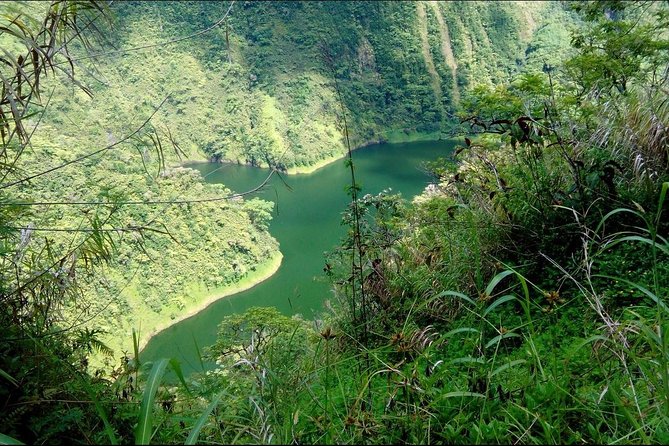
- Papenoo Valley is the main event: You travel into Tahiti’s central crater, through rainforest, mountain streams, and waterfall country.
- The road is seriously rough: The final sections can feel more like an off-road track than a road, with constant shaking and steep climbs and descents.
- Guides shape the day: Noah, Hotu, Eric, Pito Augustin, Sydney, and Tady have been praised for local stories, plant knowledge, humor, music, and careful driving.
- Bring cash for lunch: Food is not included, and the restaurant may accept cash only. A meal can cost about $25 to $40.
- Swimming may be possible: Bring a swimsuit and towel for a refreshing stop in a mountain stream, though the water can be cold.
- Pack light: Luggage is not permitted. Pickup and drop-off are offered at hotels and the wharf.
Why Tahiti’s interior is worth a full day
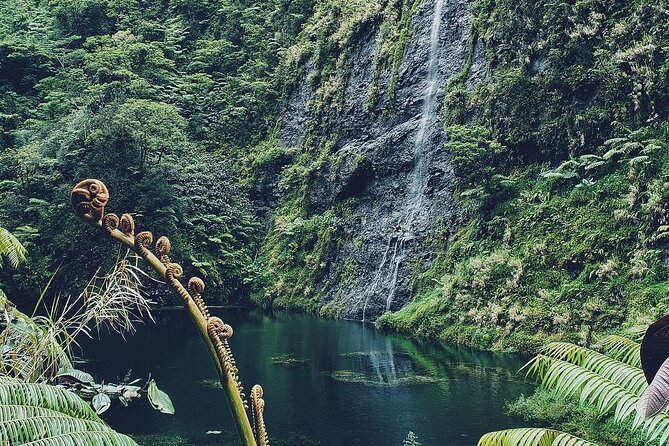
Tahiti is easy to picture as a ring of beaches, resorts, and seaside roads. The interior tells a different story. Tall volcanic ridges rise quickly from the coast, and the Papenoo Valley cuts into the island’s heart. This tour follows that natural route by 4×4, opening up places that are difficult to reach on foot and unsuitable for a standard rental car.
The reward is not a list of famous monuments. It is the steady change in scenery: coastal settlements give way to thick greenery, then to steep valley walls, waterfalls, streams, giant ferns, and broad mountain views. You also get a glimpse of archaeological sites and hear about Tahitian plants, animals, geology, and culture.
At $137 for roughly eight hours, the price is fair if you want access to the interior and do not want to organize transport yourself. The fee covers pickup, a local guide, the 4×4, and service charges. Lunch is extra, and that matters because the day is long. You should carry enough cash for food and drinks rather than assume you can use a card.
Other days on the back roads in Tahiti:
- Crossing Island of Tahiti 4×4 Mountain, Waterfall, River, Basins
★ 4.5 · 532 reviews - Découvrez le Mana durant la traversée de Tahiti en 4×4 Safari
★ 5.0 · 456 reviews - 4×4 Safari HEREAKIMANU Tour in the Heart of Tahiti
★ 5.0 · 61 reviews
Starting on the east coast and entering Papenoo Valley
The day begins around 8:30 a.m., with pickup available from your hotel or the wharf. The route starts on Tahiti’s east coast and then turns inland toward Papenoo Valley. This early section helps you understand the island’s shape: the busy coastal strip quickly gives way to a much wilder setting.
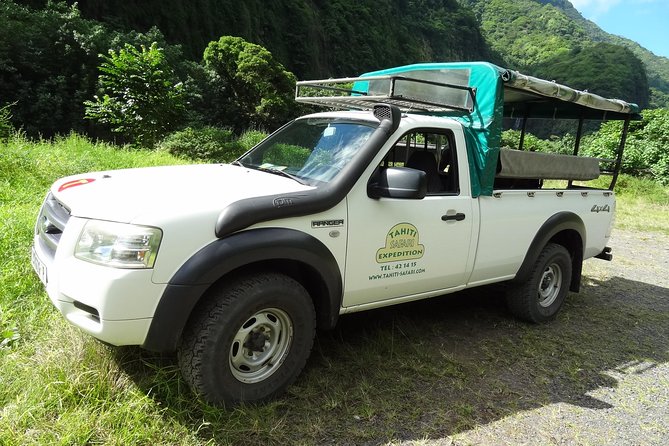
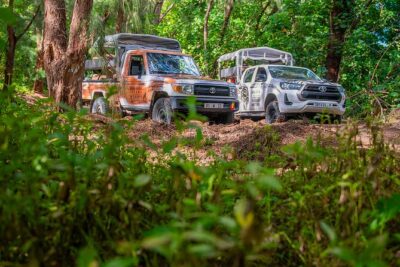
The 4×4 is the attraction as much as the transport. Some vehicles have an open rear section, and guides may remove the top for better views. You can sit or stand in the back, with handrails and padded seats offering some help over rough ground. Standing can make the ride feel smoother for some people, but you still need to hold on carefully.
The road rises and falls sharply. Expect uphill and downhill stretches, loose or uneven surfaces, and repeated jolts. The vehicle’s ability is impressive, but your body still feels every rut. I would choose a front seat if you have a sensitive back, though one passenger with titanium in their back found the front more comfortable while a person in the rear experienced much more shaking.
Rainforest, giant ferns, and mountain streams
Once you are inside the valley, the setting becomes the reason to keep going. Thick rainforest closes in around the road, with giant ferns and colorful tropical plants along the route. The air, light, and sound change as you move away from the coast.
This is where the guide can make a major difference. Noah has been praised for explaining plants and local history in both French and English. Hotu has shared information about the island’s formation, tropical fruit, and Tahitian culture. One guide even harvested native fruit beside the road and brought prepared examples, including the famous magic fruit, which changes how certain foods taste.
You may stop to look at plants, fruit trees, creeks, or unusual features along the route. The quality of the commentary depends on the guide and the language match on your particular departure. Some guides offer a lively running explanation, while at least one English-speaking passenger received little information beyond a brief comment about a tunnel.
That makes it sensible to ask questions. If you want botany, history, or cultural detail, speak up early. The best guides enjoy explaining what you are seeing, and your questions can turn a long drive into a more personal experience.
Waterfalls and viewpoints in the crater
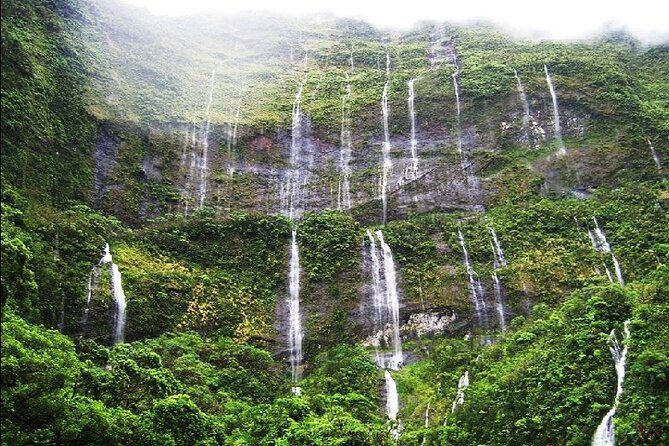
Waterfalls are scattered through the valley, and the 4×4 route gives you repeated photo stops. Some falls appear beside the road, while others are framed by steep green slopes and dark rock. You are not simply driven to one viewpoint, given five minutes, and sent away. The scenery changes throughout the crossing.
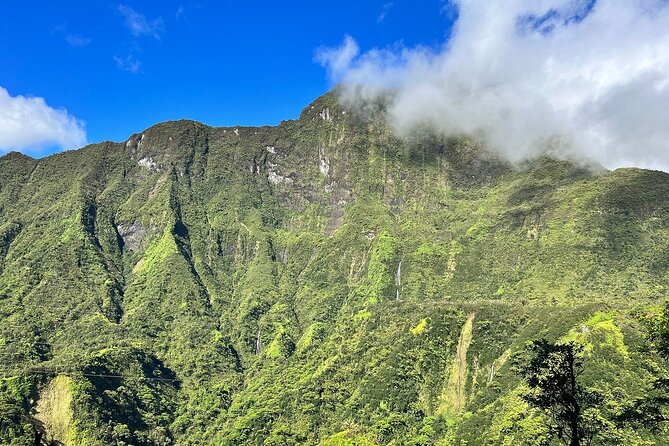
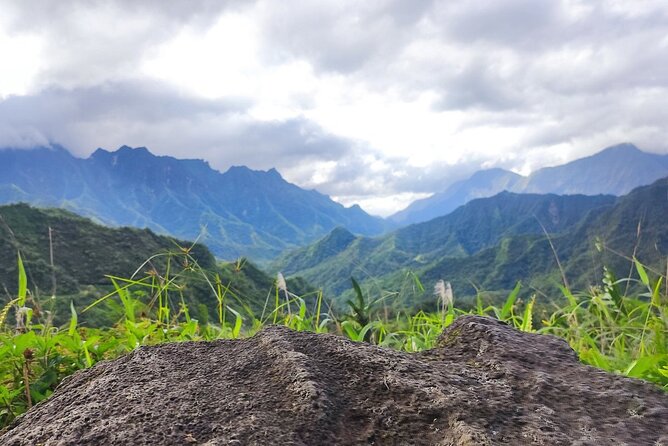
The mountain views are especially strong when the road opens up. From higher sections, you can look across the valley and see the scale of Tahiti’s volcanic interior. The coast may feel far away, even though you began the morning near the sea.
Bring a phone or camera that you can handle securely. Rain is possible, and the vehicle may use clear side curtains to keep passengers dry. A waterproof pouch is useful, but it is not listed as a required item. The official advice is more basic: hat, sunscreen, comfortable walking shoes, swimsuit, and towel.
The walking is not described as a long hike, but you should still wear shoes with a good grip. You may climb out for photos, inspect a site, or walk beside a stream. This is not a polished nature park with level paths and railings.
Same island, a completely different day:
- Private Island Tour ( 5 HOURS)
★ 5.0 · 216 reviews - Half-Day Snorkeling Tour in Tahiti
★ 4.5 · 136 reviews - Respectful whale excursion to Tahiti in 4h30
★ 4.5 · 123 reviews - Discovery of Tahiti Nui Island
★ 4.0 · 115 reviews
Archaeological sites and a closer look at Tahiti
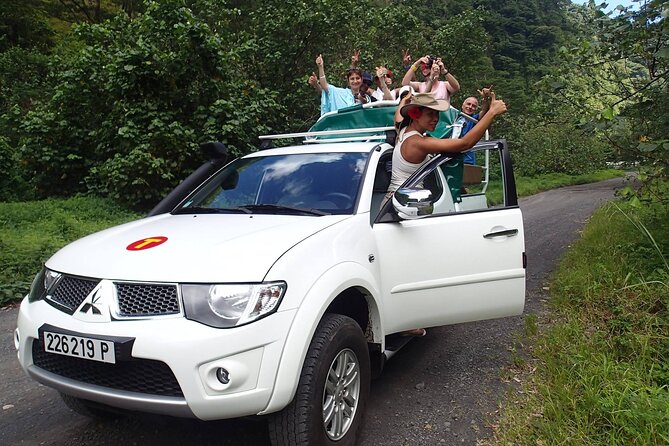
The tour also visits archaeological sites, adding a cultural layer to the scenery. These stops help place the valley in the story of Tahiti rather than treating it as empty wilderness. Your guide may explain what you are seeing and connect the site with local history and traditions.
The amount of detail can vary. Guides such as Noah, Hotu, and Pito Augustin are praised for sharing information about Tahitian culture and the island’s past. Other departures have been less informative, especially for English speakers. If cultural context is important to you, the guide is a key part of the experience, not a minor extra.
I like this balance of natural and human history. You see waterfalls and native plants, but you also get reminders that Tahiti’s interior has long been part of local life. That is more satisfying than treating the mountains as scenery alone.
Lunch is simple, extra, and worth planning for
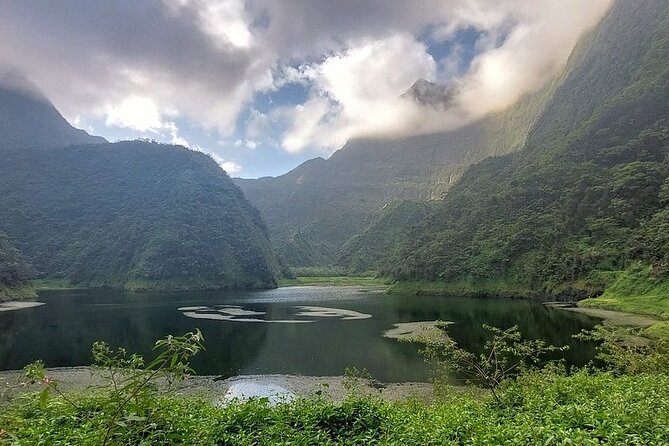
Lunch is not included in the $137 price. Time is set aside at your own expense, usually at a restaurant in the valley or crater area. The setting can be lovely, with mountain views, but the stop has drawn mixed reactions because it may last 30 to 40 minutes or much longer.
Some people found the break too long. One especially poor experience involved a three-hour wait, though that should not be treated as the normal plan. Another passenger brought a sandwich, expecting to eat independently, and found the restaurant staff unhappy when the meal was declined. The practical lesson is clear: ask your operator what the lunch arrangement will be, and carry cash.
Meals have been described as large and reasonably priced, though one hamburger cost about $25 and was served cold with hot fries. Sharing a dish may make sense. If you prefer a packed lunch, confirm in advance that you can eat it at the stop without causing a problem.
The lunch break is also your chance to rest your hips and back. After several hours of bouncing, a slow meal can be useful, even if it feels too long when you are eager to continue.
Swimming in a cold mountain stream
Bring your swimsuit and towel because swimming may be offered at a mountain stream. The water is clean-looking and refreshing, but it can be cold. This is a short, natural stop, not a resort pool, so you should be comfortable changing with limited facilities.
For many people, the swim is a highlight because it breaks up the drive. After hours in a warm, open vehicle, cool water feels welcome. If you do not want to swim, you can use the stop for photographs and a rest.
Conditions can change with weather, water level, and the guide’s judgment. Do not assume every departure will include a long swim. The tour description specifically recommends bringing the gear, so it is sensible to be prepared.
The ride itself: thrilling for some, tiring for others
The phrase 4×4 safari can sound adventurous, but here it has a very specific meaning. You spend much of the day on rough, unpaved roads. One passenger described the final 45 to 60 minutes as exceptionally rough, with so much bouncing that a pedometer counted thousands of extra steps while sitting in the vehicle.
That is not a complaint to dismiss. The jolts are the central physical fact of this tour. The ride can be funny and thrilling when shared with a good group, but it can also leave you tired, sore, or frustrated. One person called it a great adventure after accepting the bumps. Another found eight hours of shaking too much.
You should be comfortable with steep roads, repeated jolts, and riding in an open or partly open vehicle. The listed maximum weight is 95 kilograms, or 209.43 pounds, per person. The activity is listed as suitable for most people, but that does not mean it is gentle or ideal for every body.
The group is intended to be small, with a stated maximum of six in one description and an overall activity limit of eight. A smaller group makes it easier to hear the guide, share the better viewpoints, and get help climbing in and out of the vehicle.
The guide can make or break the day
The strongest part of this experience is often the person behind the wheel. The driver must handle steep, narrow, rough roads while also explaining the island and keeping the group involved.
Noah is praised for strong English and French, plant knowledge, humor, and careful attention to a bilingual group. Hotu has been described as friendly, multilingual, and especially good at explaining island formation, fruit, plants, and Tahitian culture. Eric has earned praise for fun commentary and competent driving, although one English-speaking passenger found communication difficult on a different departure.
Pito Augustin is described as passionate about sharing the island. Sydney has been praised for excellent English and French, while Sydney and Tady were noted for being caring guides during a long day. Some guides have entertained passengers with singing and ukulele playing.
You cannot choose the guide from the information provided, so treat the names as examples rather than a promise. The experience can range from a richly explained day to a mostly scenic ride with little commentary. That is the main variable beyond the weather and road conditions.
Practical details for a smoother day
Pickup and drop-off are offered from hotels and the wharf, and the listed start time is 8:30 a.m. Confirmation is sent within 48 hours, subject to availability. Book at least 48 hours ahead for Tuesday through Friday departures, and at least 72 hours ahead for Mondays and weekends.
Do not bring luggage. It is specifically not permitted on the tour. Carry only the day’s essentials: water, sunscreen, a hat, a towel, a swimsuit, a camera, and cash for lunch.
The experience requires good weather. If poor weather forces cancellation, you are offered another date or a full refund. The same applies if the minimum number of participants is not reached. Outside those situations, the booking is non-refundable and cannot be changed, so do not reserve casually if your plans are uncertain.
Should you book the Crossing Over Tahiti Island Safari?
Book this tour if you want to see Tahiti’s interior, enjoy rough-road adventure, and value waterfalls, rainforest, mountain streams, plants, archaeological sites, and local stories over a polished sightseeing route. It is especially appealing if you have already seen the coast and want a very different side of the island.
Skip it if you need a smooth ride, have serious back or mobility concerns, dislike long vehicle days, or want a predictable lunch and tightly timed stops. The full eight hours can feel long, especially when the road is at its roughest.
For the right person, $137 is a good price for access to remote parts of Papenoo Valley, hotel or wharf transport, a local driver, and a full day of scenery. Just book with your eyes open: this is not a comfortable coach tour. It is a magnificent, sometimes bone-shaking ride into the heart of Tahiti.
FAQ
How long is the Tahiti 4×4 safari?
The tour lasts approximately eight hours, with an advertised start time of 8:30 a.m.
Where does the tour begin?
The expedition starts on Tahiti’s east coast and continues into the Papenoo Valley and the island’s central crater.
Is hotel pickup included?
Yes. Pickup and drop-off are offered from hotels and the wharf.
Is lunch included in the price?
No. Lunch is at your own expense. You should bring cash because the restaurant may accept cash only.
Can I swim during the tour?
Swimming may be possible in a mountain stream. Bring a swimsuit and towel, but be prepared for cold water.
How rough is the 4×4 ride?
The route is very bumpy, with steep uphill and downhill sections and long stretches on unpaved roads. The final part may be especially rough.
Can I bring luggage?
No. Luggage is not permitted on the tour.
What happens if bad weather cancels the tour?
You will be offered another date or a full refund if poor weather causes the cancellation.
Just added around Tahiti
- Sea Scooter Snorkel Tour – Lagoon Discovery : Wrecks, Coral Gardens and Tropical Fishies★ 5.0 · 37 reviews
- Shared 4.5h Circle Island Tour of Tahiti Nui by Lydia★ 5.0 · 42 reviews
- Whale watching on the preserved and quiet coast of Paea (Pk26)★ 5.0 · 40 reviews
- Ferry Transfer between Papeete, Tahiti and Moorea★ 4.0 · 31 reviews
- DEEP SEA FISHING 1/2 day (private group)★ 4.5 · 18 reviews
- Private Tours of Tahiti by Lydia. Full or Half Day★ 5.0 · 46 reviews
- Tahiti island: 4 hours Snorkeling Tour★ 4.7 · 47 reviews
- Papeete Food & City Tour★ 5.0 · 59 reviews
ATV & 4WD Safaris, compared.
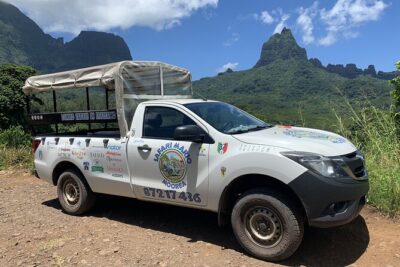
Moorea 4WD Tour Inc. Belvedere, Pineapple Farm, Magic Mountain…
Read our review →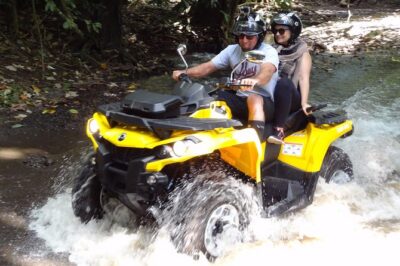
Grand Tour Quad Excursion in Moorea (Single or Two-Seater)
Read our review →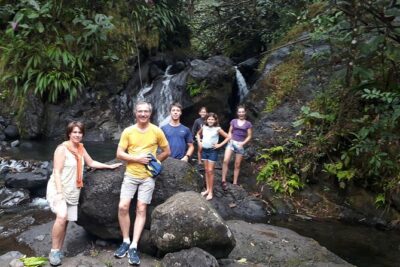
Crossing Island of Tahiti 4×4 Mountain, Waterfall, River, Basins
Read our review →
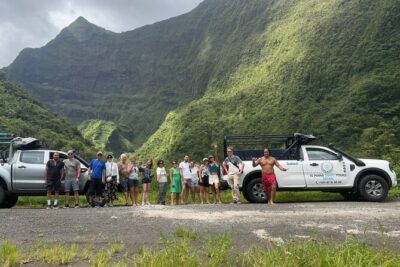
Découvrez le Mana durant la traversée de Tahiti en 4×4 Safari
Read our review →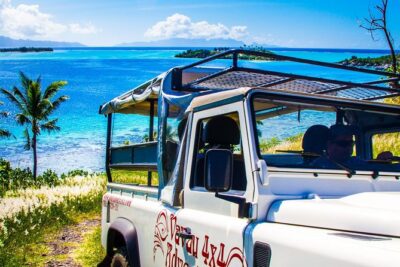

Browse the lists this tour appears in