Reviewed · THE PACIFIC
ADVENTURE KOKODA 10-Day Premium Kokoda Campaign Trek Australian Led
The most meaningful part of this Kokoda trek is not simply crossing Papua New Guinea from south to north. It is walking the wartime route while stopping at battle positions, supply areas, artillery sites, old patrol tracks and memorials. The Isurava Dawn Service, held at 5:00 in the morning, gives the journey its emotional center.
I like two things right away: the careful link between the walking and the campaign story, and the strong practical support. Your tent is carried and put up for you, meals are cooked on the trail, and the group has satellite communication, radios and trained first-aid support. The two nights at Bombers campsite are also a smart touch, giving you time for Lake Myola and the crashed P40 Kittyhawk site instead of rushing past them.
The main consideration is the physical demand. This is a serious mountain trek, not a guided rainforest stroll. You’ll face steep climbs, high ridges, wet conditions and long days, often starting before sunrise. The $3,443 price includes a great deal, but a personal carrier, international flights, insurance, medication and personal gear cost extra.
Key points before you commit
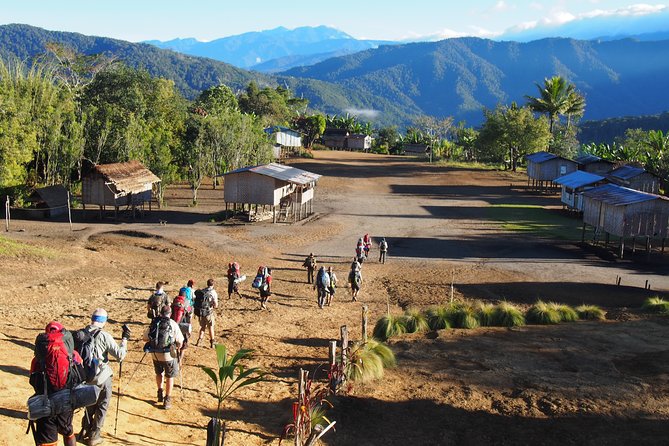
- The route follows the wartime track from Owers Corner to Kokoda, with military briefings at Imita Ridge, Nauro, Efogi, Isurava and Kokoda.
- Two nights at Bombers campsite allow a full day at Lake Myola 1 and Lake Myola 2, plus a visit to the crashed American P40 Kittyhawk.
- The 5:00 AM Isurava Dawn Service is the emotional high point, held at the memorial with your PNG guides and carriers.
- A maximum group size of 15 keeps the expedition personal and makes battlefield talks easier to follow.
- Your support team is substantial, with a specialist Australian expedition leader, Koiari trek leader, guides, carriers, cook, first-aid support and emergency communications.
- The package is nearly full service, but you still need to budget for a personal carrier, flights, travel insurance, malaria medication and your own clothing and equipment.
Why this Kokoda route is different
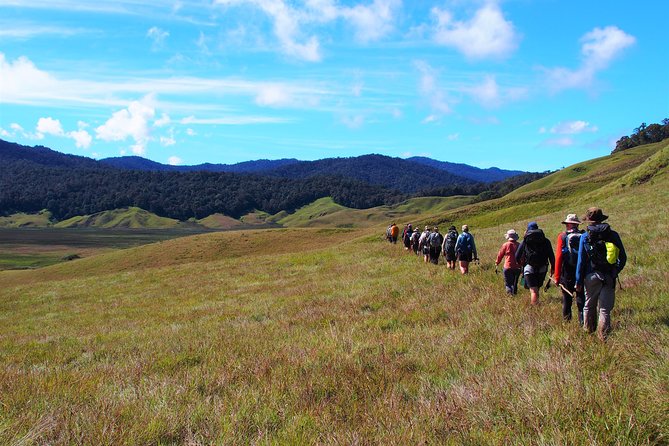
Many guided walks use Kokoda as a hard physical challenge. This one treats it as a battlefield study carried out on foot. That difference matters. You are not just climbing from one village to the next. You are stopping to understand why a ridge, creek, saddle or clearing mattered to the soldiers who fought there.
The Australian expedition leader acts as the battlefield guide, while the Koiari leader and local team provide track knowledge and practical help. Past leaders connected with the operation include Peter Morrison, Angelo, Jake and Major Scott Babington. Leadership can change by departure, so confirm the named leader before booking if that matters to you.
The group limit of 15 is sensible. On a narrow track, a huge group would stretch out and make the briefings harder to hear. A small party also fits better with village campsites, local guides and the quiet, serious tone of the memorials.
This is called a 10-day Premium Campaign trek, but the full program takes about 12 days. The first and final days cover Port Moresby, accommodation, transfers and flights. The walking portion runs from Owers Corner to Kokoda, with the route broken into demanding stages.
Other walks into the interior of the Pacific:
- Half-Day Guided Hike to Afareaitu Waterfall
★ 5.0 · 177 reviews - Private Breathtaking Koroyanitu Half Day Waterfall Hike
★ 5.0 · 49 reviews - Private Day Trip Hike and Boat in Moorea
★ 5.0 · 48 reviews
Port Moresby and Sogeri: a useful start
You arrive in Port Moresby, transfer to Sogeri Lodge and attend a trek briefing before dinner. This first evening gives you time to meet the expedition staff, check your equipment and understand the rhythm of the days ahead.
The schedule supplied for the first day lists a 2:00 PM arrival, while the meeting information gives a 6:00 AM start at Jacksons International Airport. That is worth clarifying before you pay for flights. The program includes pre and post-trek twin-share accommodation and meals in Papua New Guinea, which removes much of the usual arrival-day guesswork.
The following morning includes a drive to McDonald’s Corner, an inspection of the monument, and onward travel to Owers Corner. At Owers Corner you meet the guides and carriers and inspect a 25-pound artillery gun before setting off. This opening is valuable because it places the first steps in a clear military setting.
The visit to Bomana War Cemetery is included as well. It belongs near the beginning of the trip, since it provides a quiet introduction to the human cost behind the names and locations you will hear about on the track.
Owers Corner to Imita Ridge
The first walking stage takes you toward the Golden Staircase and up to Imita Ridge at about 860 metres. You inspect weapon pits among the rock face of Fortress Imita, the defensive line held by Australian forces during the campaign.
This is an early warning about the route. The track is steep, and the humidity can make a climb feel harder than its map height suggests. You’ll want a steady pace rather than a fast start. Your guide’s briefings are most useful when you arrive with enough energy to listen.
The military sites here are not polished attractions. You may find earthworks, rough positions and jungle growth rather than large signs. That is part of the value, but it also means you need to pay attention to the guide and watch your footing.
Maguli Range, Banana Camp and Nauro
The climb to the Maguli Range, also called Mogolonumu, reaches about 1,335 metres. False ridges make the ascent feel longer, though the high points bring wide views. Breakfast at Banana Camp breaks up the stage, followed by inspections of Japanese delaying positions.
The next day begins at 5:00 AM and heads toward Hehomuri Creek at the base of Ladavi Saddle. You then climb to Nauro Lookout at about 1,035 metres before continuing to Menari Gap. The early start is not a novelty. It helps the group manage long distances and the heat, but you should expect sleep to be interrupted throughout the trek.
This section is a good test of your preparation. A strong physical fitness level is required, and the repeated climbs can be tiring even for regular hikers. The supplied group gear includes ropes, machetes, shovels and tarpaulins, but it does not replace your own boots, clothing, rain protection or personal first-aid kit.
Same island, a completely different day:
- Cruisin Fiji: Authentic Fijian Day Cruise – Best Day in Fiji
★ 5.0 · 2,409 reviews - Moorea 6-Hour Snorkeling and Lunch Shared Tour
★ 5.0 · 1,758 reviews - Half-Day Muri Lagoon BBQ Lunch Cruise including Snorkeling
★ 5.0 · 1,518 reviews - Full Day Lagoon Group Tour in Bora Bora with Lunch
★ 5.0 · 1,423 reviews
Efogi and the fighting around the villages
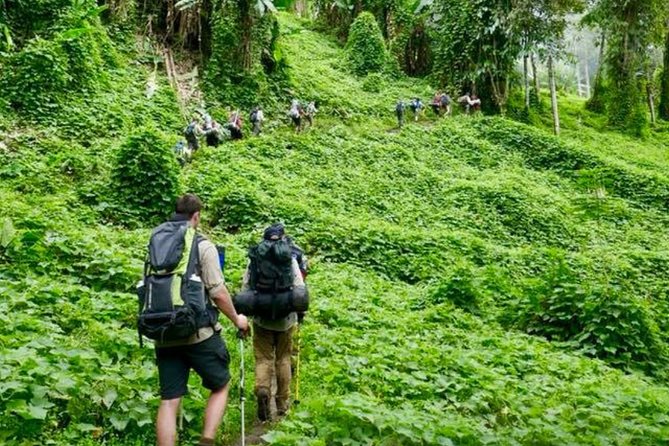
From Kavai Creek, the track climbs to Efogi 2 Village, also known as Laununumu, at about 1,385 metres. You inspect a Japanese monument erected by Corporal Nishimura and receive a briefing on the Japanese assembly area and the fighting around Efogi.
This is where the expedition’s format pays off. A battlefield talk beside the actual route can explain movement, defense and supply in a way that a museum display cannot. The local guide and carriers also help connect the route to present-day village life, rather than reducing the area to an outdoor war memorial.
The camps are basic. You are not booking a lodge-to-lodge walking holiday. You sleep in a personal mosquito-proof tent, with the guides carrying, erecting and dismantling it. The arrangement saves energy, but you still need to be comfortable with wet ground, limited privacy and simple village facilities.
Bombers campsite and the two Myola lakes
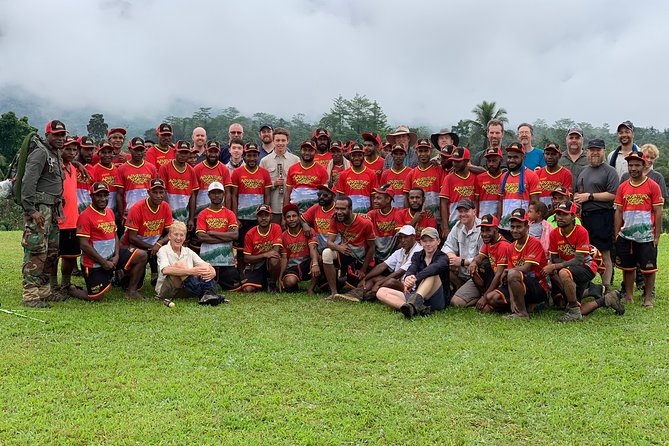
The two nights at Bombers campsite are one of the strongest design choices in the program. Instead of forcing you onward each day, the extra night creates room for the Myola area, one of the more unusual parts of the route.
You walk through the Moss Forest to the edge of Lake Myola 1, then cross toward Lake Myola 2. Myola 2 is described as a prairie-like area in an extinct volcanic crater. Captain Bert Kienzle discovered the lakes while searching for a route through the mountains, and they later became important logistic areas during the campaign.
You also inspect the American P40 Kittyhawk fighter aircraft that crashed on the northern edge of the lakes. The site gives the day a direct link to wartime aviation and supply. Afterward, you return to Bombers for a late lunch and a make-and-mend afternoon in the Moss Forest.
That slower afternoon is practical, not filler. You can repair clothing, sort equipment and rest your legs. On a trek with repeated early starts, a scheduled pause can make the difference between enjoying the second half and simply enduring it.
Mount Bellamy and the Kokoda Gap
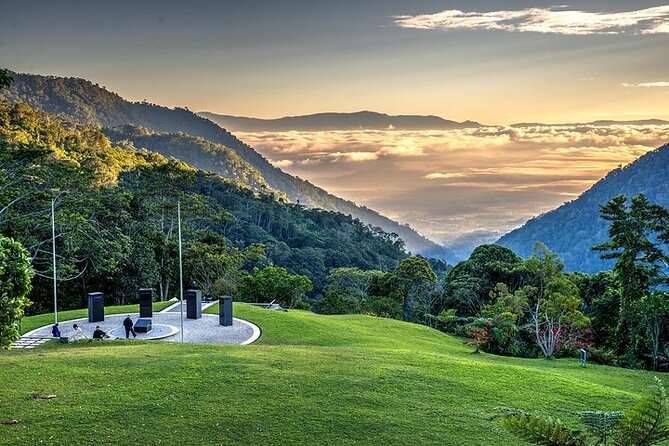
The route then climbs along the track cut by Captain Kienzle toward the main Mount Bellamy junction at about 2,245 metres. You continue to Kokoda Gap at roughly 2,190 metres, with views down toward the Yodda Valley on the northern side.
These are among the highest sections of the route, so the altitude and cold may feel different from the lower rainforest stages. The route still demands effort on the descent, where tired legs and loose or wet ground can create their own problems.
The appeal here is the change in scale. Earlier stages focus on creeks, ridges and close jungle positions. From the high points, you can understand the mountain barrier the soldiers had to cross. It also makes clear why logistics were so difficult and why places such as Myola mattered.
Vabula Ridge and Isurava Memorial
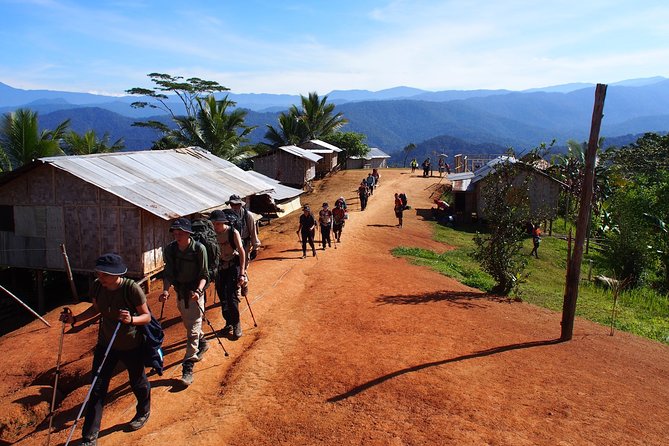
From Vagebau Creek, the route reaches Vabula Ridge at about 1,905 metres before descending to a defensive position occupied by the 2/14th and 2/16th battalions during fighting with Japanese forces. These are long, information-heavy days, so keep a small notebook or use your phone only when conditions allow. Names and locations come quickly.
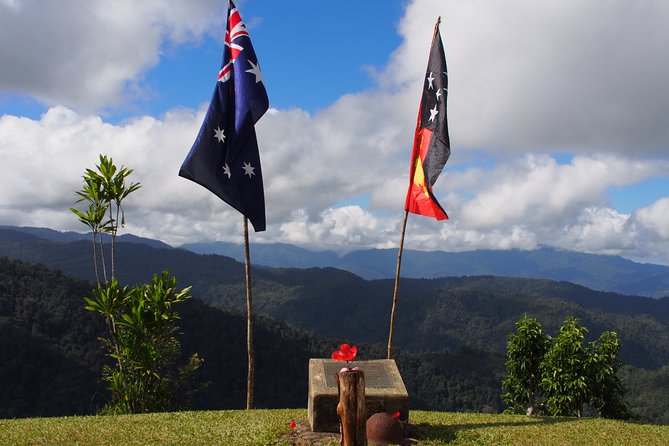
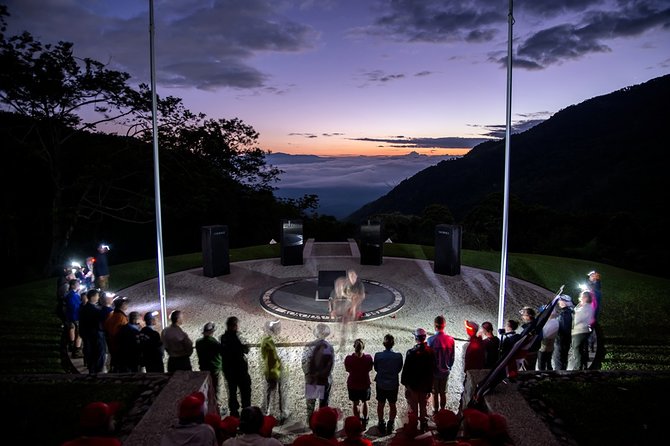
The next morning begins at 4:30 AM. At 5:00 AM, the group holds the Dawn Service at Isurava Memorial, followed by a briefing on the Battle for Isurava. You take part with the PNG guides and carriers, which gives the ceremony a shared and respectful character.
This is likely to be the most powerful part of the trip. The timing, the memorial setting and the route you have already walked combine to make the service more than a stop for photographs. It is also a moment when the physical hardship takes on a clear purpose.
Afterward, you trek through Etume and Ilole creeks to Isurava Village and continue down the mountain. The four-hour schedule shown for this day is shorter than most stages, but the pre-dawn start means it is not an easy morning.
Hoi to Kokoda and the finish
The final walking day starts from Hoi and descends to Kokoda at about 395 metres via Kovello. You inspect the plateau where the 39th Militia Battalion first met Japanese forces, then receive briefings on the two battles for Kokoda.
Monuments, memorials and the Kokoda area complete the campaign story. Finishing here feels appropriate because the route ends at the name most people associate with the campaign, after you have crossed the ground behind it.
The final day returns you to Port Moresby. You check out of Sogeri Lodge at 9:00 AM and arrive at the airport for an 11:00 AM check-in. Keep your departure plans simple and allow the operator to confirm the exact flight timing, especially if you have a separate international connection.
What the $3,443 price actually covers
At $3,443, this is expensive compared with an ordinary guided hike, but it includes more than walking instruction. The package covers vehicle transfers, campsite and village fees, the Kokoda Track Authority permit, private charter flight between Port Moresby and Kokoda, pre and post-trek accommodation, meals, personal tent, local staff, Australian expedition leadership and group safety equipment.
You also receive breakfast on 11 days, dinner on 11 days and lunch on 10 days. Fresh meals are prepared on the track by a PNG cook. One piece of feedback praised the overall organization but found the food less impressive than expected, so keep your food standards realistic. This is expedition catering, not restaurant dining.
The price does not include a personal carrier. If you want someone to carry your main pack, budget for that separately. You also pay for international flights, travel insurance, malaria medication prescribed by your doctor, personal clothing, equipment and personal first-aid supplies. A 75-litre backpack is included when you engage a personal carrier.
The emergency setup adds real value. The group carries a satellite phone and two UHF radios, with a 24-hour link to Port Moresby. That does not make the route easy, but it is reassuring in a remote setting.
Who should book this experience?
I would choose this program if you want the Kokoda campaign explained on the ground, not just a certificate at the finish. It suits fit hikers who are comfortable with early starts, repeated climbs, basic camps and humid conditions.
It also suits anyone who values a small group and a strong local team. The Koiari guides and carriers are central to the experience, not an afterthought. Families can take part, and one recent group included a parent and daughter, but shared enthusiasm does not remove the physical challenge.
I would not choose it for a casual first hike, a soft camping holiday or a quick sightseeing trip from Port Moresby. You need to train, take malaria advice from your doctor, buy proper insurance and bring clothing suited to wet mountain conditions.
Free cancellation is available up to 24 hours before the start time. A minimum group size applies, and the operator may offer another date or a full refund if that minimum is not reached.
My verdict on Adventure Kokoda
I like the way this experience gives the Kokoda route time to breathe. The Bombers rest day, the Myola lakes, the P40 aircraft, the battlefield talks and the Isurava Dawn Service add meaning beyond simply reaching Kokoda.
The price is fair for the amount of transport, staffing, equipment, accommodation and safety support included, though the personal carrier and personal gear can push your final budget higher. Book it if you want a serious, guided campaign trek and are ready to train for it. If your main goal is a cheaper rainforest walk, choose a shorter or less history-focused option instead.
FAQ
How long does the full experience take?
The program takes about 12 days. It includes the arrival and departure arrangements in Port Moresby, the trek from Owers Corner to Kokoda, accommodation before and after the walk, and transport between key points.
Where does the trek start and finish?
The listed meeting point is Jacksons International Airport in Port Moresby. The walking route starts at Owers Corner and finishes in Kokoda, after which you return to Port Moresby for departure.
Is a personal carrier included?
No. A personal carrier is an additional cost. If you hire one, a 75-litre backpack is included.
What meals are included?
The package includes breakfast on 11 days, dinner on 11 days and lunch on 10 days. Fresh meals are cooked and served on the track by the PNG cook.
Is the Isurava Dawn Service included?
Yes. The service is scheduled for 5:00 AM at the Isurava Memorial and is followed by a briefing on the Battle for Isurava.
How large is the group?
The maximum group size is 15 trekkers. The experience requires a strong level of physical fitness.
Just added around the Pacific
- Apia Port: Cruise Guests’ Shore Excursion★ 4.7 · 4 reviews
- Largest Zipline in South Pacific & Cave Exploration Coral Coast★ 5.0 · 39 reviews
- Chief Roi Mata Domain & Artok Island Tour of Vanuatu★ 4.0 · 5 reviews
- Skydive Fiji Legend 13000ft Tandem Jump (60 seconds free fall)★ 5.0 · 24 reviews
- CFC APPROVED Private Departure Transfer – Shangri-La Fijian Rst to Nadi Airport★ 5.0 · 22 reviews
- Discovery Bush Walk from Port Vila★ 5.0 · 27 reviews
- Tongatapu: 3-Hour West Coast Scenic Tour★ 3.7 · 29 reviews
- “Discover Fiji’s Hidden Gems: Eco Park, Pottery Village & Dunes!”★ 4.5 · 23 reviews
Hiking & Trekking, compared.
Private Breathtaking Koroyanitu Half Day Waterfall Hike
Read our review →