
Reviewed · PAPEETE
Papeete : walking tour
Papeete reveals itself best on foot, one city block at a time. With guide Pauline, you’ll move from the waterfront and Bougainville Park to the cathedral, municipal market, Assembly of French Polynesia, and Town Hall. It is a compact introduction to Tahiti’s capital, with culture and local stories rather than a quick list of photo stops.
I like the easy pace, which leaves room for questions, short rests, and practical advice for the rest of your stay. I also like the market visit, where Pauline can explain local products and customs instead of leaving you to wander past the stalls without context.
The main consideration is the heat. Two hours on city sidewalks can feel longer under the tropical sun, and Papeete can be noisy. Bring water, a hat, sunscreen, and comfortable shoes. Headsets are not provided, so you may need to stay close to Pauline near busy roads.
Key points at a glance
- Meet Pauline at the waterfront Tourist Office: The tour begins inside the Tahiti Tourisme office, making it simple to find after arriving in central Papeete.
- See five central landmarks in two hours: The route includes Bougainville Park, the Assembly, the Catholic Cathedral, the municipal market, and Town Hall.
- Get a useful first look at Tahiti: Pauline explains Papeete’s past, Polynesian culture, French connections, local plants, and products sold in the market.
- Walk at a relaxed city pace: The route uses sidewalks and includes several stops, with restroom breaks possible during the tour.
- Book with weather and opening days in mind: The Assembly is closed on weekends and public holidays, when Jacques Chirac Place may replace it.
- Wheelchair and scooter friendly: The sites are described as accessible, though the experience still involves walking and standing.
Why this two-hour Papeete walk works
Papeete is often treated as a gateway to the rest of Tahiti. Visitors arrive by cruise ship, ferry, or plane, then hurry toward beaches, mountain roads, or resort areas. That can leave the capital feeling like a place you passed through rather than a place you understood.
This walk gives you a useful foundation. You see the main civic and cultural sights, but the real value comes from the connections between them. Pauline links Tahiti’s Polynesian traditions with its French administration, religious buildings, public spaces, and everyday market life.
The route is also manageable. You are not signing up for a strenuous hike or a full-day city march. It lasts two hours and keeps to central Papeete, with a leisurely pace and several scheduled stops. That makes it a sensible first activity, especially if you have limited time in town.
I would not choose it as a substitute for seeing Tahiti’s natural scenery. There are no mountain viewpoints, lagoon outings, or remote villages here. This is a city orientation, and it works best when you want to understand the capital before heading elsewhere.
Other guided walks around Papeete:
- Shared 2 Hour Papeete Walking Tour
★ 5.0 · 13 reviews - Papeete Walking Tour – Tahiti
★ 5.0 · 78 reviews - Moorea: Aquablue Helmet Underwater Walking Experience
★ 4.9 · 53 reviews
Starting at the Tahiti Tourisme office
You meet inside the Tourist Office of Papeete, close to the waterfront. Tell the staff member that you are waiting for Pauline. This is a practical meeting point because it is central and easy to identify.
The starting location also helps set the tone. You are not being collected from a distant hotel or placed on a bus before the tour begins. You meet your guide in the middle of the city and start walking almost at once.
Pauline guides in French, English, and Italian. The tour can be conducted in more than one language, although a multilingual tour is uncommon, so it is sensible to confirm your preferred language when booking. Her approach, based on the information available, includes plenty of explanation and time for questions rather than a rushed speech at every stop.
If you are arriving from a cruise ship, allow enough time to reach the Tourist Office. The reservation uses local time and date, an easy detail to overlook when your booking was made in another time zone.
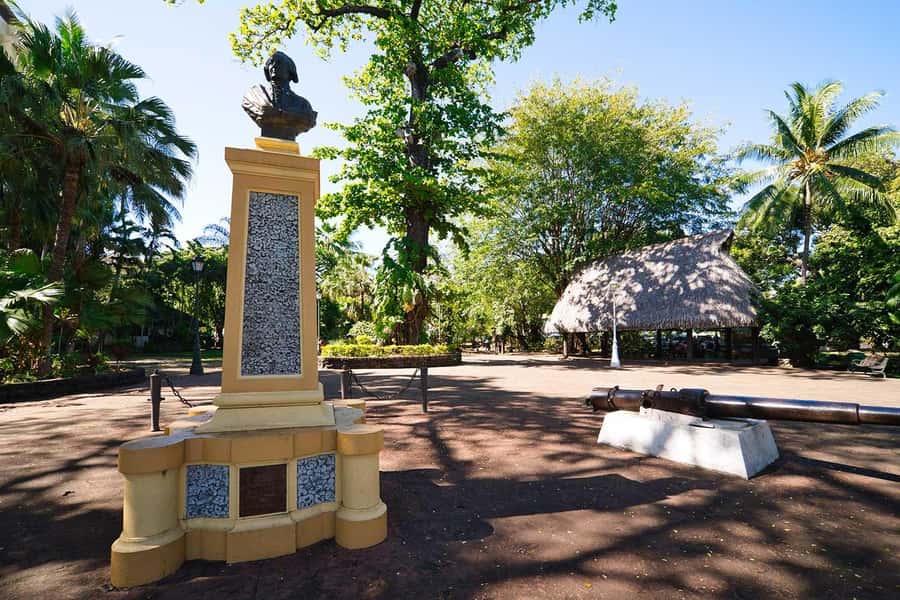
Bougainville Park and the waterfront beginning
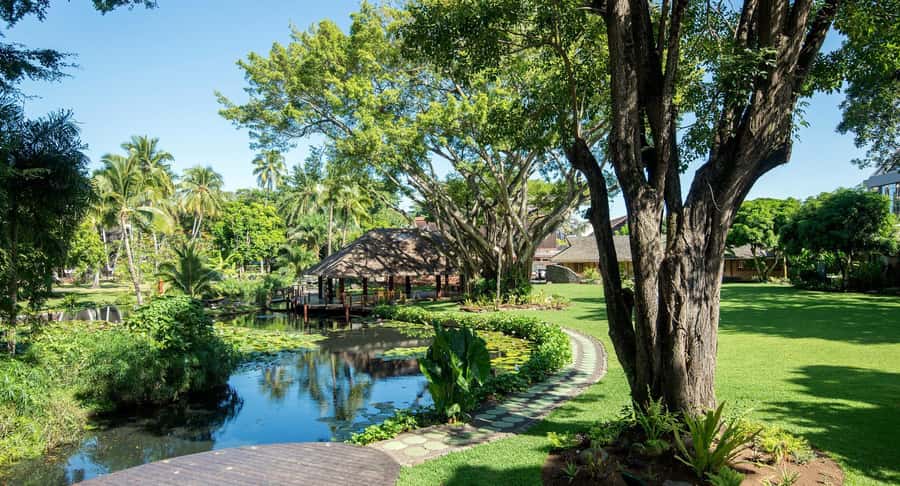
Bougainville Park is one of the early stops and gives you a gentle introduction to central Papeete. A park visit may sound modest, but it offers a useful pause from the traffic and built-up streets. It also creates room for Pauline to discuss Tahitian plants, public spaces, and the city’s connection to its natural setting.
The park is especially helpful at the start because the walk does not throw you straight into a long lecture. You can get oriented, settle into the pace, and begin asking questions about what you are seeing.
The waterfront setting adds to the sense of place. Papeete is both a capital and a port, and this opening area helps you understand how the city functions as a center for French Polynesia. You are seeing more than postcard scenery. You are seeing the working heart of Tahiti.
Bring a hat at this stage. Shade may not cover every part of the route, and the sun can become a factor well before the two hours are over.
The Assembly of French Polynesia
The Assembly of French Polynesia brings the political side of Tahiti into the walk. It is one of the clearest places to consider the relationship between Polynesian identity and French administration.
You are not simply looking at an official building. Pauline uses the stop to explain the civic setting and the wider history of French Polynesia. This gives the tour a useful balance. It is not limited to traditional culture or colonial-era architecture, and it does not present Papeete as a generic tropical city.
Admission to the buildings visited is included. That matters here because you can get a closer look rather than viewing the Assembly only from the pavement.
The timing of your visit is important. On weekends and public holidays, the Assembly is closed. In that case, the route can use Jacques Chirac Place instead. This is not a reason to avoid those days, but you should know that the exact stop may change.
Same island, a completely different day:
- 5 Hours Tahiti Island Tour – West and East Coast
★ 5.0 · 1,020 reviews - Moorea Street Food Tour
★ 5.0 · 410 reviews - Unique Tahiti Tour – personalised, small group east coast tour
★ 4.5 · 314 reviews - Unique Tahiti Tour – personalised, small group west coast tour
★ 5.0 · 286 reviews
The Catholic Cathedral and Papeete’s French influence
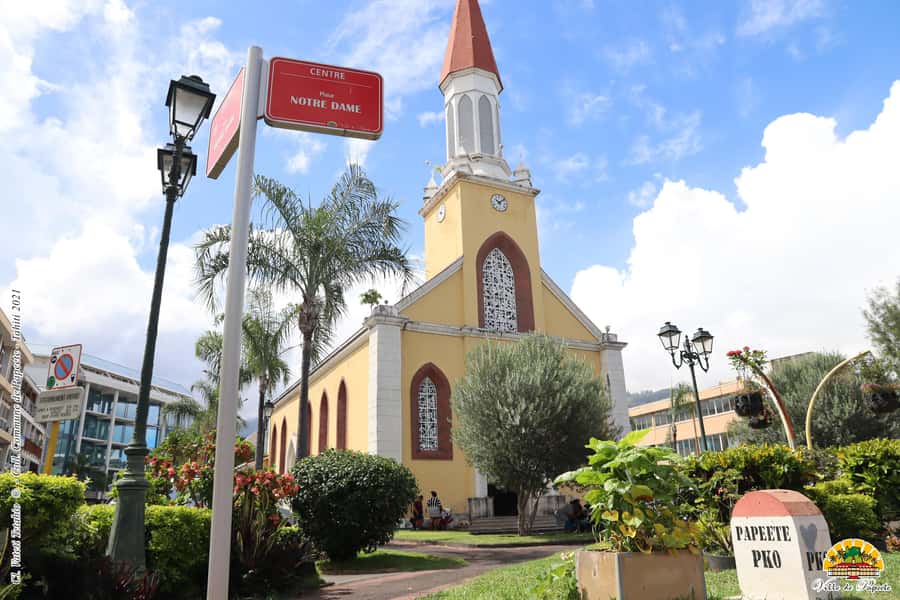
The historic Catholic Cathedral adds a religious and architectural layer to the walk. It helps show how outside influences became part of Papeete’s identity while local Polynesian traditions continued to shape the city.
The cathedral is also a good change of rhythm. After civic buildings and outdoor walking, a church visit offers a quieter stop and a chance to look closely at the building itself. The tour’s architectural focus is strongest here, since the route is designed to point out the character of Papeete’s public and religious buildings.
Pauline’s explanations are useful if you want more than a photograph. You can ask about the cathedral, French influence, and the way Christianity fits into Tahitian culture. The tour is not built around a single theme, which means you receive a broad introduction rather than a specialist lecture.
As with the rest of the walk, modest clothing and respectful behavior are sensible for a religious site. The supplied details do not state a formal dress code, so the practical point is simply to treat the cathedral as an active place of worship.
The municipal market, the most lively stop
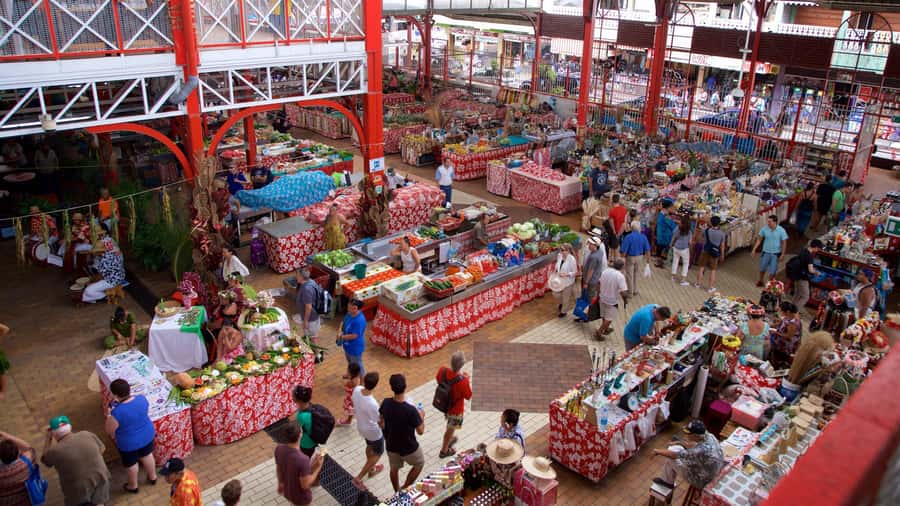
For many people, the municipal market will be the highlight. It is colorful, active, and more revealing than a standard sightseeing stop. Here you get a glimpse of the products people buy and sell, along with the tastes and habits that shape daily life in Papeete.
A guide makes a real difference in a market. Without context, you may see fruit, flowers, crafts, and prepared foods without knowing what is local, what is seasonal, or what deserves your attention. Pauline can explain products for sale and answer questions as you move through the stalls.
Give yourself room to look around. This is not a stop to rush through while trying to keep up with a group. The overall pace is relaxed, and the market provides one of the best chances to ask about food, gifts, and local customs.
The market can also be busy and noisy. That is part of its appeal, but it creates a practical issue: stay near Pauline so you can hear her. One person specifically suggested headsets because Papeete can be noisy. If you have hearing difficulty, a small group or private booking may be worth considering.
Town Hall and the city’s public face
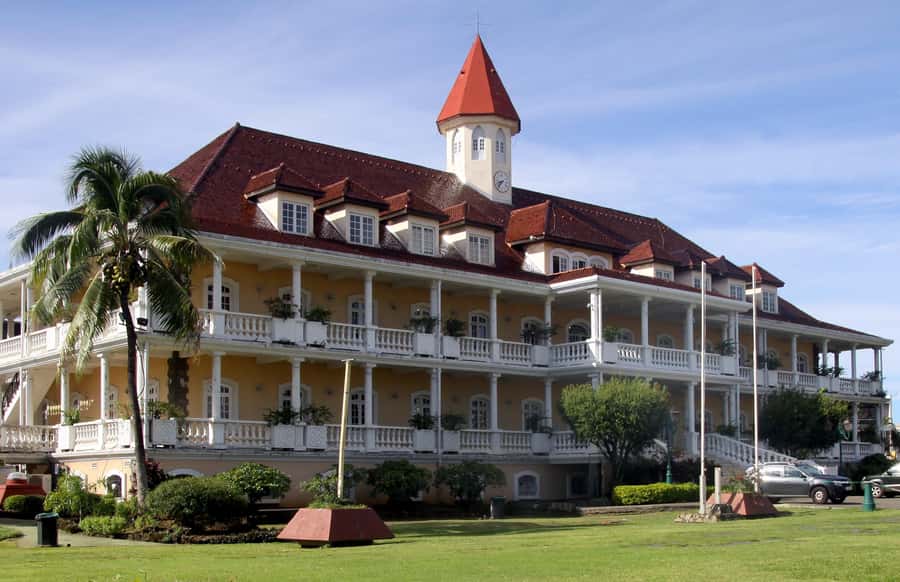
Town Hall completes the civic side of the route. Along with the Assembly, it shows how Papeete presents itself as the capital of French Polynesia.
This stop is about more than taking in another impressive building. Pauline explains the city’s story through its architecture, public institutions, and cultural background. By this point, the route has moved through a park, a political building, a cathedral, a market, and the Town Hall. That mix gives you a more rounded picture than a walk focused only on monuments.
Free admission to the buildings visited is included, which helps the $58 price feel more reasonable. You are paying for a guide-led experience with access to several central sites, not merely a stroll around streets that you could cover on your own.
Still, value depends on your interests. If you prefer independent wandering, have already studied Papeete, or mainly want shopping time, the cost may feel high for two hours. If you value interpretation and want to ask questions, the price is easier to justify.
Pauline’s guiding style and group options
Pauline is the central part of this experience. She is described as warm, clear, and willing to adjust the tour to questions. Her explanations cover Papeete and wider French Polynesia, with room for subjects such as local plants, culture, products, and history.
The tour can also include practical suggestions for the rest of your stay. That is useful early in a visit, when you are still deciding how to spend your time in Papeete.
A private group is available. The standard details do not specify the size of a regular group, so do not assume that every departure is private. If personal attention matters to you, request the private option rather than relying on a small group.
Pauline has also adjusted start times to help avoid the hottest part of the day when possible. Availability varies, so check the starting time offered for your date. An early start is worth considering if you are sensitive to heat.
Walking comfort, weather, and accessibility
The walk uses city sidewalks and is described as low impact. You should still be ready to walk and stand for the full two hours. Comfortable shoes matter more than stylish footwear, especially if you plan to continue exploring afterward.
Pack:
- A small bottle of water
- A sun hat
- Sunscreen
- Comfortable walking shoes
Rain is also possible. One tour continued in wet weather, with Pauline persevering through the conditions. That does not mean you should ignore the forecast. A light rain layer or compact umbrella could make the experience easier, though these items are not specifically listed as required.
All sites are described as accessible to wheelchairs and scooters. The walk remains a city walking tour, so check your own comfort with sidewalks, standing, and weather. If you need particular assistance, contact the provider in advance.
Who will get the most from this tour?
I would recommend this walk to a first-time visitor who wants a clear introduction to Papeete before exploring more of Tahiti. It also suits cruise passengers, people with only a few hours in the capital, and anyone who prefers local context to sightseeing alone.
It works well for couples, families, and small private groups. The easy pace makes it approachable for people who do not want a demanding excursion. The market, cathedral, civic buildings, and park also give the tour enough variety to hold attention for two hours.
History and architecture fans will appreciate the stops at the Assembly, cathedral, and Town Hall. Food and shopping fans will get the most from the market portion. If you want to ask about Polynesian culture, French influence, or local products, Pauline’s broad subject knowledge adds value.
I would choose another activity if your main goal is the lagoon, mountain scenery, wildlife, or a long beach day. Papeete’s appeal here is urban and cultural. The tour helps you read the city, not escape it.
Should you book this Papeete walking tour?
Book it if you want a relaxed, well-organized first look at central Papeete, especially if Pauline is available in your preferred language. The mix of market life, public buildings, religious architecture, and Polynesian and French cultural context is more useful than simply ticking off landmarks.
At $58 per person, it is not the cheapest way to walk around town. You can see the outside of several buildings without a guide. The value comes from the explanations, included admission, market context, practical suggestions, and the chance to ask questions during a compact two-hour route.
Choose an early time to reduce the heat, confirm the local date and time, and remember that the Assembly may be replaced by Jacques Chirac Place on weekends and public holidays. If you bring water, a hat, and patience for city noise, this is a strong way to get your bearings in Papeete.
FAQ
Where does the Papeete walking tour begin?
Meet inside the Tourist Office of Papeete near the waterfront. Tell the agent there that you are waiting for Pauline, your guide.
How long does the walking tour last?
The tour lasts two hours and follows a leisurely route through central Papeete.
Which places are included?
The planned stops include Bougainville Park, the Assembly of French Polynesia, the Catholic Cathedral, the municipal market, and Town Hall.
What happens if I visit on a weekend or public holiday?
The Assembly of French Polynesia is closed on weekends and public holidays. Jacques Chirac Place may be arranged as an alternative stop.
Which languages are available?
The tour is offered in French, English, and Italian. Tours can use more than one language, although this is uncommon.
Is the tour suitable for wheelchairs and scooters?
The sites are described as accessible to wheelchairs and scooters. You should still be comfortable with walking and standing for the duration of the two-hour tour.
Just added around Papeete
- Private Big Game Fishing Day★ 4.5 · 17 reviews
- Shared 2 Hour Papeete Walking Tour★ 5.0 · 13 reviews
- Shared Transfer: Hotel or Cruise Port to Tahiti Airport★ 4.5 · 32 reviews
- Tahiti excursion adventure circuit MTB MTB E-Bike private valley★ 5.0 · 54 reviews
- Private Full-Day Tahiti — Grotto, Gardens & Panoramas★ 5.0 · 47 reviews
- Electric Bike Rental Moorea★ 4.5 · 53 reviews
- Tour Tahiti in Private★ 5.0 · 51 reviews
- Bora Bora by Land and Sea: 4WD Safari and Snorkel★ 4.7 · 80 reviews
Walking Tours, compared.
Browse the lists this tour appears in