
Reviewed · RAROTONGA
3-Hour Rarotonga Island Discovery Tour
Rarotonga’s best stories are often found away from the beach, on back roads lined with taro, mango, tapioca, and citrus gardens. This 3.5-hour tour gives you that wider view, with local guides such as Nat or Chicko explaining island customs, family life, faith, food, and the voyage of the seven canoes.
I like the small-group feel many departures offer, even though the maximum is 30 people. I also like the air-conditioned vehicle, the useful hotel pickup, and the chance to try local fruit, cake, or coconut treats. The main drawback is that the tour can feel like a drive with commentary rather than a series of long sightseeing stops, and the museum mentioned in some tour material is not always visited.
Key points to know
- Black Rock carries spiritual meaning: This volcanic boulder is traditionally linked with the departure of spirits for Avaiki, the afterlife.
- Avana Point recalls a major Polynesian voyage: The Garden of Seven Canoes marks the departure of seven canoes for New Zealand in 1350.
- You see working island life: Back roads, food gardens, plantations, marae, churches, and village areas give the tour its local focus.
- Local guides shape the experience: Nat, Chicko, and other island guides bring family stories, humor, and cultural context to the drive.
- Air conditioning matters: Rarotonga can be hot, and the covered vehicle makes a morning of sightseeing easier.
- Book early in your stay: The tour is useful for getting your bearings and finding ideas for the rest of your visit.
Why this tour is more than a drive around the coast
Rarotonga is easy to picture as a ring of beaches and lagoon water. That is only half the story. Inland, the island has food gardens, churches, old marae, plantation areas, and small villages where daily life follows a slower rhythm.
This tour gives you a quick introduction to that side of the island. You are not signing up for a long hike or an activity-heavy outing. Instead, you ride in an air-conditioned vehicle, listen to live commentary, get out at selected points, and connect the visible places with Cook Islands tradition.
That format suits me when I arrive somewhere new. I can get a sense of direction, hear the basic story of the place, and ask questions before setting off on my own. If you want a full day of beaches, swimming, or adventure, this is not that tour. If you want context, it does the job well.
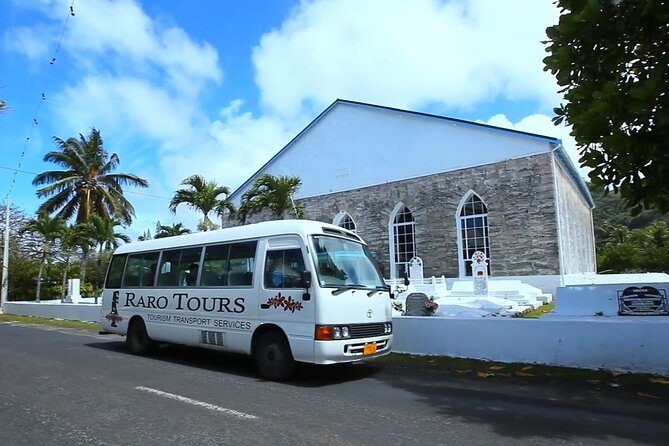
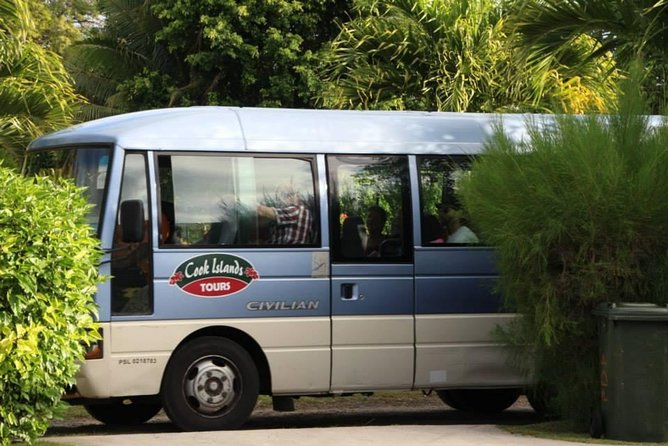
The tour starts at 9:30 am and lasts about three and a half hours. Hotel transfers are included, which saves you the trouble of arranging transport to a central meeting point. The vehicle has air conditioning, a useful feature in the tropical heat, although one departure had a problem with the air conditioning. That appears to be an exception, but it is worth keeping in mind if comfort is a major reason for booking.
Other ways to see the whole island in the Pacific:
- 5 Hours Tahiti Island Tour – West and East Coast
★ 5.0 · 1,020 reviews - Reef Discovery Half Day Group Signature Tour
★ 5.0 · 968 reviews - Snorkeling excursion, discovery of the lagoon, small group.
★ 5.0 · 861 reviews
Black Rock and the story of Avaiki
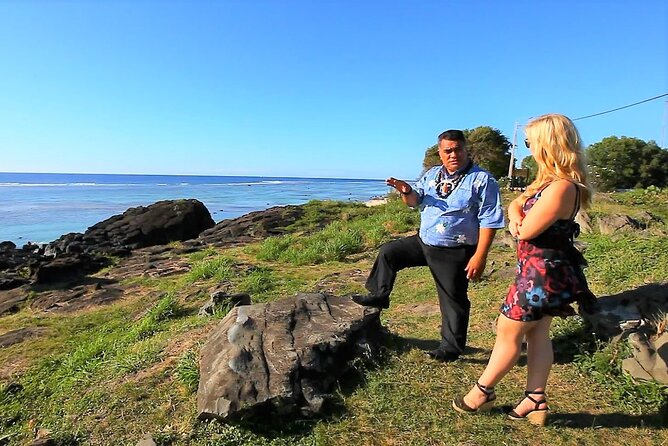
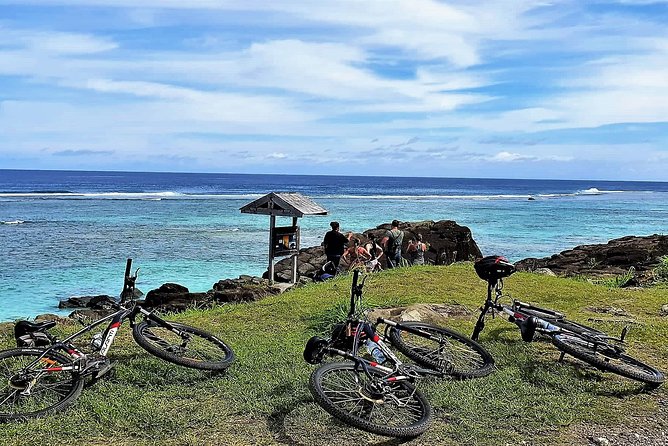
Black Rock is one of the clearest examples of how a simple natural feature can carry cultural meaning. The dark volcanic boulder sits at the edge of the lagoon, and Cook Islands tradition connects it with the point where spirits leave for Avaiki, the afterlife.
You get about 15 minutes here. That is enough to look at the rock, hear the story, and take in the beach setting, but not enough for a long beach visit. The stop works best if you treat it as a cultural site rather than just another photo opportunity.
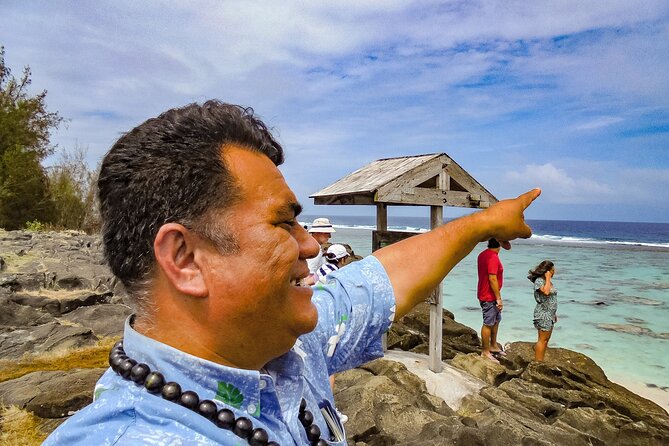
I like this early stop because it sets the tone for the morning. The guide is not only pointing out scenery. You are being shown how the island’s natural places connect with spiritual beliefs and older traditions.
Do not expect an extended ceremony or a long walk. This is a brief introduction, and the quality of the explanation depends on your guide. Guides such as Nat have been praised for connecting these places with personal knowledge of island life, while Chicko has been described as an entertaining guide with a strong sense of place.
Avana Point and the Garden of Seven Canoes
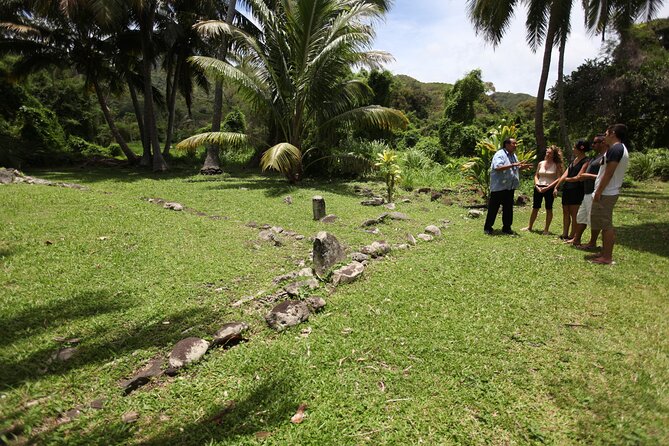
At Avana Point, the focus shifts from spiritual tradition to Polynesian migration. The Garden of Seven Canoes is a circular arrangement of stones commemorating the seven canoes that left Avana passage for New Zealand in 1350.
This is another short stop of roughly 15 minutes. The stones themselves are not a large monument, so the value comes from the story attached to them. Your guide explains the voyage and its place in the wider story of Polynesian settlement.
I find this kind of stop more rewarding once you know what you are looking at. Without the explanation, it can seem like a modest stone circle. With the story, it becomes a marker of a huge ocean journey and the skill required to cross the Pacific in traditional canoes.
The tour description also refers to lagoons, limestone churches, and other historical places. The exact amount of time at each point can vary. You should expect an overview rather than a detailed visit at every site.
Back roads, food gardens, and everyday Rarotonga
The strongest part of the tour may be the time between the formal stops. The vehicle uses back roads and passes plantations and home gardens growing taro, mango, tapioca, citrus, and other food crops.
This is where you see a side of Rarotonga that a beach day will not show you. The emphasis is on how families use the land, how crops support local life, and how food connects with hospitality and tourism. If you enjoy gardens or food traditions, bring questions. The tour is more rewarding when you engage with the guide rather than simply watch the view pass by.
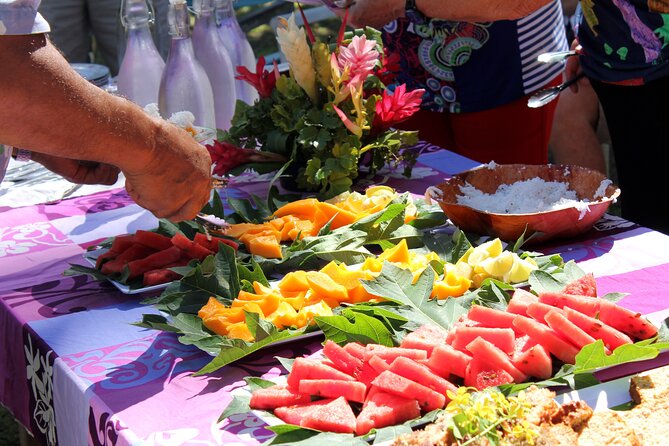
The coconut receives special attention. You learn why it matters to Cook Islanders, and some departures include a coconut demonstration. The refreshments may include fresh fruit, cake, date scones, and coconut-based treats. The food is a welcome addition, but keep expectations realistic: this is light refreshment, not a full restaurant meal.
Some visitors describe the refreshment stop as taking place in a pleasant garden setting. The combination of local food and conversation gives the morning a personal touch. It also helps break up the driving.
The agricultural part of the route changes with the season. Fruit trees may not be flowering or producing much when you visit. Even so, you can still see the planting areas and learn how island families grow food.
Other three-hour outings around the Pacific:
- Moorea Solo or Twin 3 hours Jet Ski Tour
★ 5.0 · 522 reviews - Moorea Solo or Twin 3 hours 30 ATV Tour
★ 5.0 · 322 reviews - Moorea Combo 3 hours Jet Ski & 3 hours 30 ATV
★ 5.0 · 265 reviews - 3-Hour Snorkeling Tour
★ 5.0 · 190 reviews
Churches, marae, and the island’s changing traditions
The tour also brings in Cook Islands history, including the arrival of missionaries and the way Christianity affected relations among the island’s kingdoms. Limestone churches are part of this story, as are marae and other places connected with older traditions.
This is not a specialist archaeology tour. You will hear a broad account of the island’s religious, political, and cultural changes, usually while moving between stops. That gives you a useful framework, though anyone wanting long site visits or detailed historical study may find the treatment brief.
A particularly worthwhile point is Arai-Te-Tonga, which is connected with the island’s chiefly and ceremonial past. The exact stop pattern can vary, but the tour has been used to explain marae, waka, local leadership, and the relationship between older customs and Christian practice.
The tone can also differ by guide. Some guides bring humor and personal stories. Others focus more closely on facts and historical explanation. That variation is normal on a locally led tour, but it means the experience is not identical every time.
What the guides add to the morning
A local guide makes a major difference here. The tour is built around interpretation, not high-energy entertainment or a long list of attractions.
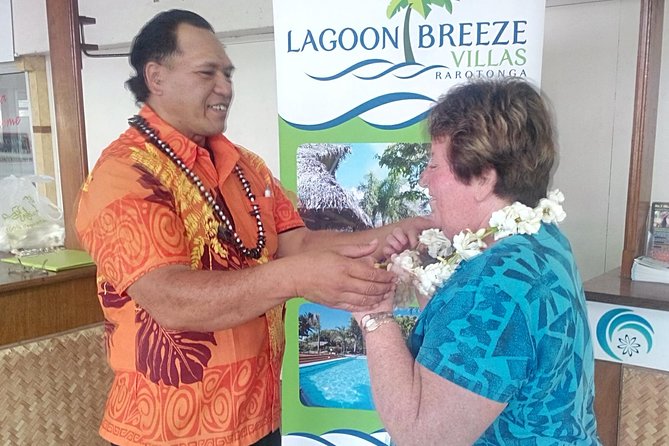
Nat is one guide associated with especially warm, personal commentary. His stories include growing up in the Cook Islands, local food production, family connections, and the meaning of places along the route. Chicko has also been praised for humor and for helping visitors get a clear overview of the island.
You may have a guide who is also the driver. That can make the outing feel informal and flexible, especially in a small group. On one departure, only four people rode in a well-kept minivan. Another solo booking still went ahead, with two guides providing the commentary.
The advertised maximum is 30 people, so you should not assume a private tour. Small groups are possible, but the vehicle and group size can vary. If a quiet, personal outing matters to you, ask about the expected group size before booking.
There was also one serious complaint about a guide’s conduct and lack of useful commentary. The operator apologized and said that behavior did not meet its standards. That appears to be an isolated warning rather than the usual pattern, but it is fair to say that your guide will shape the morning more than any individual landmark.
Comfort, timing, and value at $62.06
At $62.06 per person, the tour is priced as a half-day introduction rather than as a major attraction. You are paying for hotel transfers, an air-conditioned vehicle, a guide, commentary, and refreshments.
I think the price is reasonable if you use the tour as your first look at Rarotonga. You save the cost and effort of arranging transport, and you get local guidance on places to visit later. The value is less convincing if you expect a packed sightseeing program with long stops, museum entry, or a full meal.
The air conditioning is a real benefit on a hot morning. You spend much of the tour in the vehicle, so a comfortable ride matters. There are no fold-down seats included, and the available information does not promise special seating arrangements, so contact the operator if you have a specific mobility or seating need.
The maximum group size is 30, but smaller groups are possible. Hotel pickup makes the start simple, and the tour returns you to your accommodation. The morning timing leaves the afternoon open for the beach, shopping, a market, or another activity.
The museum question and other limits
Some descriptions of the experience refer to a museum, but the museum is not always part of the actual outing. Several visitors were disappointed by that mismatch, while others did not mind because the local roads, gardens, and historical sites were more important to them.
My advice is simple: do not book this tour mainly for museum admission. Book it for the island overview, cultural explanation, back roads, and short stops at places such as Black Rock and the Garden of Seven Canoes.
You should also know that the tour covers a lot in a short time. A 3.5-hour route cannot give you a long visit at every church, marae, plantation, and beach. If you want to photograph every site or sit quietly at each place, the pace may feel too quick.
One other consideration is that some departures have arrived late for pickup. The tour normally includes return hotel transfers, but give yourself a little flexibility at the start of the day. If you are connecting this outing with a cruise schedule or another fixed booking, confirm the timing carefully.
Cruise passengers must book through the ship’s shore excursions or guest services rather than directly. The booking confirmation is normally supplied at once, but bookings made within seven days of travel may take up to 48 hours to confirm.
Free cancellation is available up to 24 hours before the start time for a full refund. A late cancellation or change is not refunded, and the tour requires a minimum number of participants. If that minimum is not reached, you are offered another date or experience, or a full refund.
Who should book the Rarotonga Island Discovery Tour

I would choose this tour early in a Rarotonga stay. It gives you a basic map of the island, introduces places you might return to, and helps you understand the difference between a resort view and ordinary island life.
It suits you especially well if you:
- Want local history and culture without committing to a full-day outing
- Prefer a vehicle tour to walking in the midday heat
- Enjoy hearing about food gardens, family life, faith, and island customs
- Like small groups and the chance to ask questions
- Need hotel pickup and a simple half-day schedule
- Want ideas for where to go after the tour
I would choose something else if your main goal is snorkeling, swimming, a full cultural performance, or a long visit inside a museum. This tour is also not ideal if you need every minute filled with major sights. Much of its value comes from the guide’s talk and the view through the window.
Should you book it?
Book this tour if you want a friendly introduction to Rarotonga that goes beyond the lagoon and resort strip. The best parts are the local commentary, the food-growing areas, the coconut traditions, Black Rock, and the story of the seven canoes at Avana Point.
The experience is strongest with a warm, well-informed guide and a small group. It is less satisfying when the commentary is thin, the air conditioning fails, or you expect the museum and every advertised site to receive a proper visit.
At $62.06, I see it as a useful first-morning orientation rather than a complete account of the Cook Islands. Take it early in your stay, listen closely, ask questions, and use the rest of your holiday to follow up on the places and ideas that catch your interest.
FAQ
How long does the Rarotonga Island Discovery Tour last?
The tour lasts approximately 3 hours and 30 minutes.
What time does the tour begin?
The listed start time is 9:30 am.
Is hotel pickup included?
Yes. Return hotel transfers are included.
Is the vehicle air-conditioned?
Yes. The tour is operated in an air-conditioned vehicle, although one departure reported that the air conditioning was not working.
What are the main sightseeing stops?
The stated stops are Black Rock Beach and Avana Point, including the Garden of Seven Canoes. The wider route also covers plantations, churches, lagoons, marae, and other cultural and historical places.
Are refreshments included?
Yes. Light refreshments are included. These can include local fruit, cake, date scones, and coconut treats.
How many people can join the tour?
The maximum group size is 30 people. Some departures operate with much smaller groups, including minivans and very small parties.
Can cruise passengers book this tour directly?
No. Cruise passengers must book through their ship’s shore excursions or guest services.
Just added around the Pacific
- Apia Port: Cruise Guests’ Shore Excursion★ 4.7 · 4 reviews
- Lagoon Tour + lunch with your feet in the water on a Motu★ 5.0 · 40 reviews
- Sea Scooter Snorkel Tour – Lagoon Discovery : Wrecks, Coral Gardens and Tropical Fishies★ 5.0 · 37 reviews
- Janzu experience: massage and aquatic relaxation in the lagoon of Moorea★ 5.0 · 9 reviews
- Shared 4.5h Circle Island Tour of Tahiti Nui by Lydia★ 5.0 · 42 reviews
- Professional Photo Shooting in Moorea, unique session adapted★ 5.0 · 8 reviews
- Whale watching on the preserved and quiet coast of Paea (Pk26)★ 5.0 · 40 reviews
- Fiji: Cultural Village Evening Tour with Dinner and Show★ 4.9 · 31 reviews
Island Tours, compared.
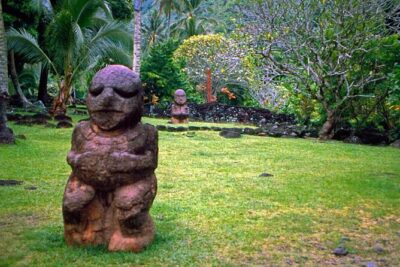
5 Hours Tahiti Island Tour – West and East Coast
Read our review →
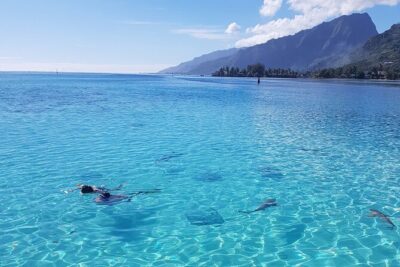
Snorkeling excursion, discovery of the lagoon, small group.
Read our review →
Garden Village Hot Spring & Temple Highlights Tour
Read our review →
Island Tour & Getaway on the Bora Bora Mountains by Quad / ATV
Read our review →
Browse the lists this tour appears in