
Reviewed · MOOREA
Swimming with Whales in Moorea (Half Day tour)
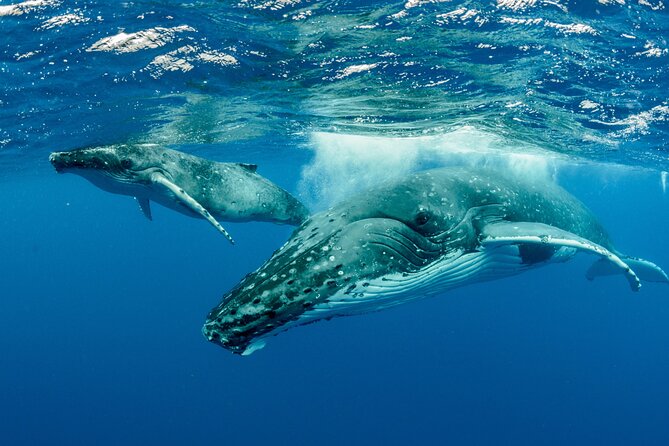
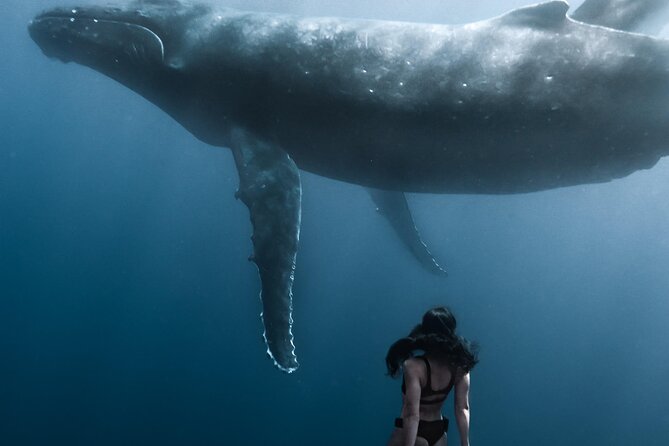
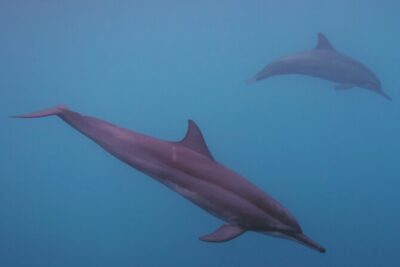
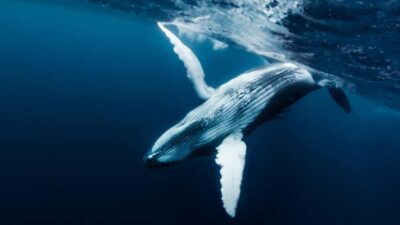
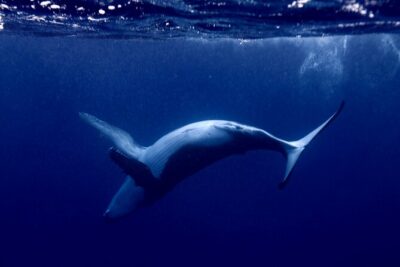
Seeing a humpback whale glide beneath you is the main event here, and Moorea’s warm Pacific waters give you a rare chance to experience it at close range. The crew may also find dolphins, stingrays, blacktip sharks, or turtles, but whales are the goal between July and late November.
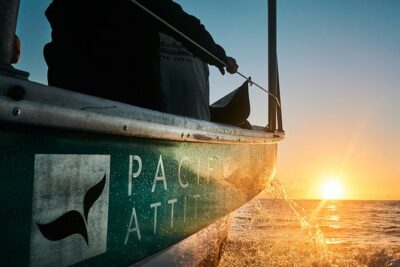
I like the small six-person boat, which gives the crew room to manage each water entry carefully. I also like the serious attention to animal behavior and safety, with guides such as Johnny, Joe, Grace, and Laura praised for clear instructions and calm handling. The catch is simple: this is not a casual snorkel. You need to swim strongly and feel at ease in open water.
Key points
- Six swimmers per boat in 2025: New regulations limit the number of people allowed in the water with humpback whales.
- Whale season runs from July to late November: Sightings are never guaranteed, but the crew searches for whales throughout the half-day.
- Strong swimming skills are required: Ocean conditions and whale movements can make the water work harder than expected.
- A boat-based option is available: You can remain aboard and watch the whales if you cannot safely enter the water.
- Wetsuits can replace the required life jacket: French law requires a life jacket unless you wear a shorty or full neoprene wetsuit.
- Expect more than whales: Dolphins, stingrays, sharks, and turtles may appear during the search.
Searching Moorea’s waters for humpback whales
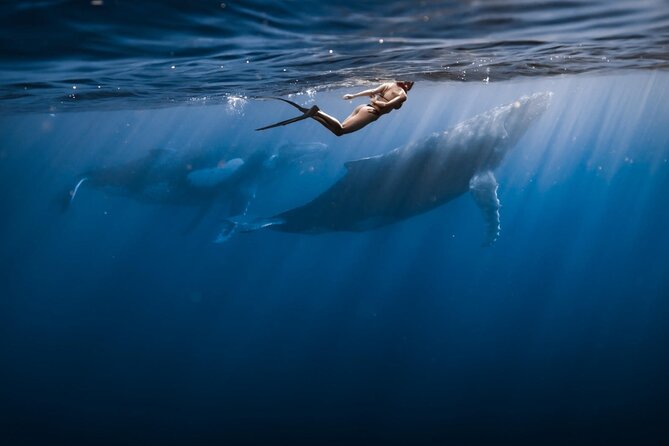
This four-hour outing begins at Moorea Expedition in French Polynesia and returns to the same meeting point. Pickup is offered, which can make the morning easier if you are staying elsewhere on Moorea, but confirm the pickup details when you book.
The boat heads into open water, where the crew watches for whale blows, backs, fins, and changes in the surface. The search is part of the experience. Some mornings bring quick sightings, while others require patience and repeated repositioning.
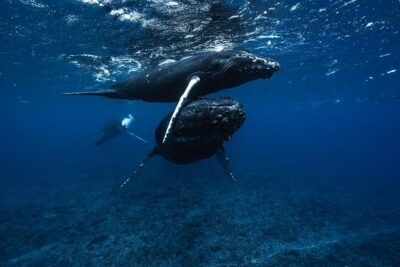
Your guide explains what the crew is seeing and how the animals are behaving before anyone enters the water. That matters because whale encounters are not staged. A mother and calf may rest near the surface, move away, circle back, or disappear into the blue.
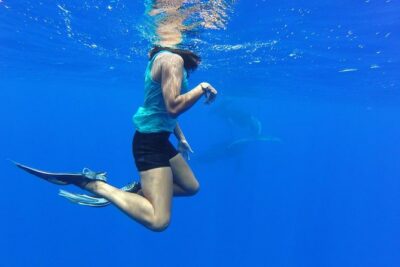
The crew’s job is to place you at a safe distance and give the whales room. You then swim or float toward the animals under instructions from the guide. The most memorable moments can be brief: a whale passing beneath you, a calf traveling beside its mother, or a pair surfacing close enough for a clear look.
Other chances to meet the humpbacks in Moorea:
- Humpback whale watching and marine life in Moorea
★ 5.0 · 199 reviews - Half day whale tour 4h00
★ 4.5 · 181 reviews - Private tour observing and swimming with humpback whales in Moorea
★ 5.0 · 126 reviews
What the four-hour itinerary feels like
The trip usually unfolds in several stages, though the exact order depends on the animals and the sea. You begin with an introduction to the boat, the equipment, and the safety rules. Snorkeling equipment and flotation devices are available, and bottled water is included.
Next comes the search. The captain and guide use their experience to locate whales while scanning the water. Several people describe the crew working hard to find animals, including late-season sightings in November. That effort is important, since the tour cannot promise a whale encounter.
Once whales are located, the guide explains where to enter and how to move in the water. Strong swimmers may get more than one entry during the trip. Some outings include two or three water entries, while other days may offer less time in the water because of rough conditions or animal behavior.
After a whale encounter, the crew may look for other species. Dolphins have saved an otherwise whale-free outing, and some trips have included stingrays, blacktip sharks, and turtles. These sightings are not guaranteed, but they add variety to the search.
Finally, the boat returns to the meeting point. You should plan for the full four hours, even if the first whale sighting comes early. The crew may need time to locate animals, wait for a safe moment, and move to another area.
Why the six-person limit matters
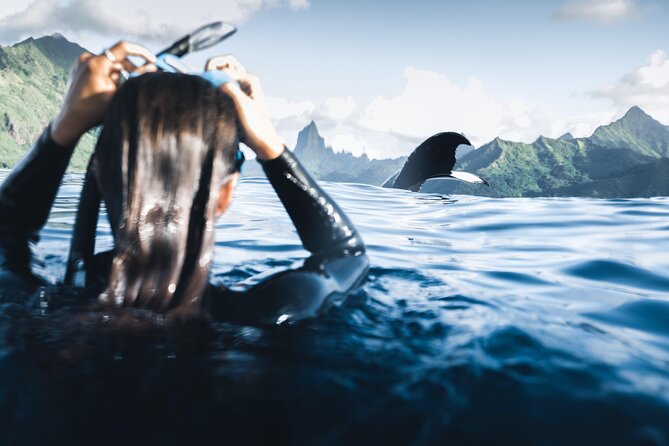
In 2025, only six people per boat may swim with humpback whales under government regulations. This is a meaningful limit, not just a marketing number.
A smaller group gives the guide more control over water entries and helps keep swimmers together. It also reduces crowding around the animals. With a large group, the first swimmers could reach the whale while others are still getting organized. Here, the boat size and group limit make the process easier to manage.
The small group does not guarantee a private encounter. The crew still has to work with the sea, the whales, and the behavior of other boats. But it does give you a better chance of hearing instructions and getting a clear look when your turn comes.
This setup also means your own swimming ability matters. The guide cannot spend the entire encounter towing one person while directing five others. One disappointing experience came from two slower swimmers who stayed at the back and later remained on the boat. The practical lesson is clear: do not book this as a first open-water swim.
Swimming with whales requires real confidence
The tour description calls the effort easy to moderate on most days, but conditions can make it harder. You need strong swimming ability and prior snorkeling experience.
You may be wearing a mask and snorkel while moving in open ocean, with waves, current, and changing visibility. The whales also control the encounter. If they move away, you may need to swim steadily to keep them in sight, always within the guide’s instructions.
This is not a pool exercise. You should be able to stay calm when the water feels rough, keep track of your group, and follow directions without freezing up. One person described the sea as choppy and advised taking a seasickness pill before departure. That is useful advice if you know you are prone to motion sickness, though medication decisions are yours.
Flotation gear is available, but it does not replace swimming skill. A flotation device can help you rest, yet you still need to enter and move through the ocean confidently.
If you are uncertain, choose the non-swimming option instead. The boat can still provide whale sightings and a good view of the surrounding water. That is a much better choice than entering the sea and discovering that the conditions exceed your comfort level.
Same island, a completely different day:
- Moorea 6-Hour Snorkeling and Lunch Shared Tour
★ 5.0 · 1,758 reviews - Moorea 4WD Tour Inc. Belvedere, Pineapple Farm, Magic Mountain…
★ 5.0 · 967 reviews - Snorkeling excursion, discovery of the lagoon, small group.
★ 5.0 · 861 reviews - Franckyfranck Tours Moorea – Half day Tours
★ 5.0 · 817 reviews
Life jackets, wetsuits, and what to bring
French law requires life jackets on whale-swimming tours unless you are wearing a neoprene wetsuit. A shorty or full suit qualifies. Life jackets are available aboard, while wetsuits can be rented through a third party.
A wetsuit is worth considering for two reasons. It can make the water feel more comfortable, and it avoids the life jacket requirement. A bulky jacket can interfere with your mask, snorkel, and swimming position, especially when you are trying to look below the surface.
Bring your own towel and sunblock because neither is included. A waterproof camera or GoPro is also sensible if you want your own photos. A few people had excellent memories with underwater cameras, but you should not depend on company photography unless that service is specifically confirmed for your departure.
Keep your attention on the animals first. A camera is useful, but fumbling with it can make you miss a whale passing beneath you. The best encounters may last only moments.
Guides who put safety first
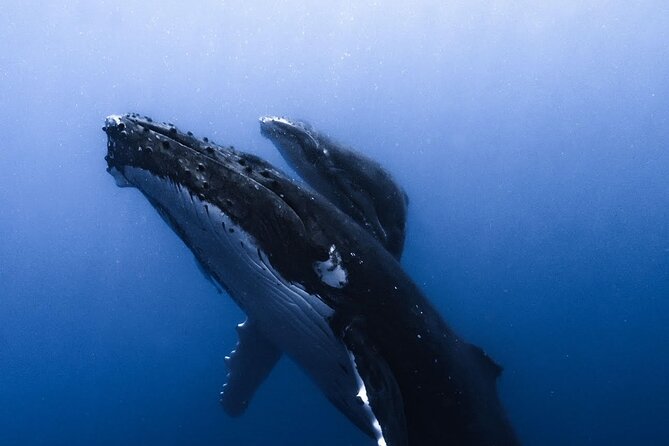
The strongest part of this experience is the crew’s handling of safety and animal behavior. Johnny is praised for clear explanations in both French and English, while Joe, Laura, and Grace are also named in connection with guiding, photography, or water supervision.
The guide explains how to approach the water and where to position yourself. The captain works from the boat, tracking the whales and choosing the next entry point. When a mother and calf are present, the crew gives them room rather than forcing a close approach.
That restraint is important. You want a close view, but the animals should not be chased or crowded. The best encounters described here happened when the whales chose to pass near the swimmers.
Communication may not feel equally strong for everyone. If you are the only English speaker on a boat where casual conversation happens mainly in French, you might feel left out between formal instructions. The crew does provide English explanations, but if detailed commentary throughout the trip matters to you, confirm the language arrangements before booking.
What the price means at $305.30
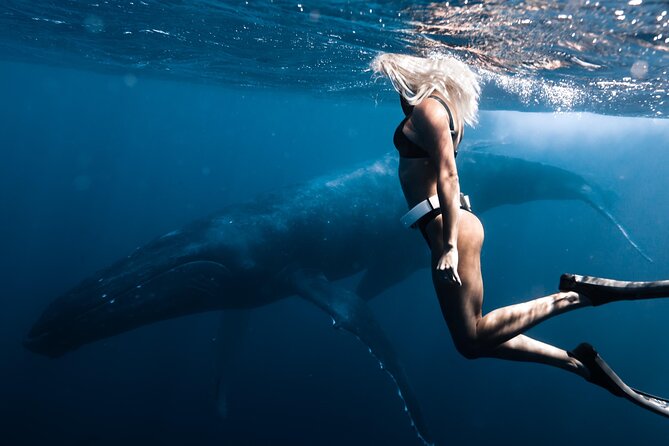
At $305.30 per person, this is an expensive half-day outing. You are paying for a specialized marine encounter, a small group, a captain and guide, equipment, and the time required to search for wild animals. Bottled water and snorkeling gear are included, but towels and sunblock are not.
The value depends heavily on what happens in the water. Swimming near a mother and calf can make the price feel justified as a once-in-a-lifetime event. Several outings included two or three entries, and some people saw multiple whales before finishing with rays or sharks.
But there is no guaranteed whale encounter. One trip found dolphins instead, despite rough seas and no whales. The experience can still be worthwhile, but you should not treat the price as payment for a guaranteed swim.
The six-person rule improves the value for strong swimmers because you are not sharing the water with a large crowd. If you plan to stay on the boat, compare this price with the company’s non-swimming tour before booking. You may not need the same format or cost if entering the water is not part of your plan.
The best season and the role of luck
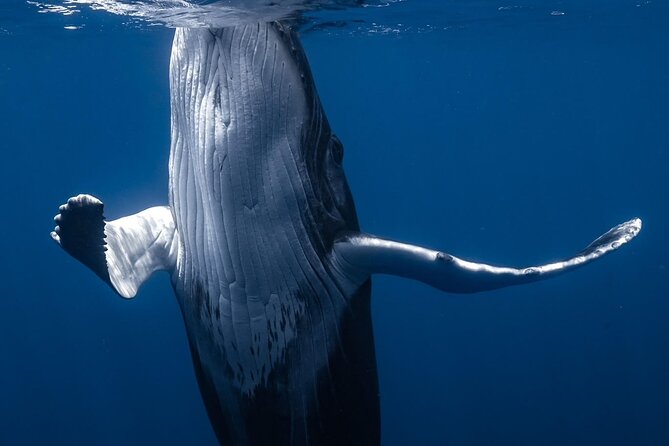
Humpback whales are present in Moorea’s waters from July through late November, and the tour’s main goal is to swim with them during that period. Late-season trips can still work. One outing near the end of November found a mother and calf, but the timing is never a promise.
Weather and sea conditions shape the day. Calm water and good visibility make swimming easier, while rough seas can turn a moderate effort into a tiring one. Whale behavior matters just as much. A whale may remain below the surface, move away, or refuse to approach the boat.
That uncertainty is part of seeing wild animals, but it is worth accepting before you pay. If you need a fixed schedule and a guaranteed sighting, this is the wrong kind of activity. If you can be patient and appreciate the search itself, the payoff can be remarkable.
Who should book this Moorea excursion
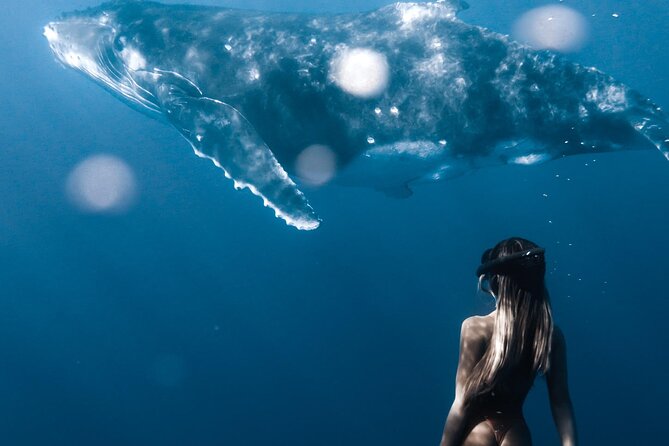
I would recommend this tour to confident swimmers, experienced snorkelers, and nature-focused visitors who understand that wildlife encounters cannot be controlled. It suits people who would rather spend four hours looking for whales than follow a fixed sightseeing route.
It is also a good match for couples, families with older children who have strong swimming skills, and anyone who wants a small group rather than a crowded boat. The crew’s attention to safety is especially valuable when the water gets rough.
I would not choose it for a beginner swimmer, anyone uncomfortable in open water, or a person who expects the guide to provide a tow. Non-swimmers can watch from the boat, but the swimming version is designed for people who can move confidently on their own.
The published rating is 4.7 from 264 evaluations, with 90 percent recommending the experience. That fits the pattern of the outing: the highs are extremely high, while the main disappointments involve rough water, no whale sighting, language gaps, or a mismatch between a swimmer’s ability and the tour’s demands.
Cancellation and practical planning
You can cancel up to 24 hours before the local start time for a full refund. Changes made less than 24 hours before departure are not accepted, and late cancellations are not refunded.
The trip requires suitable weather and a minimum number of people. If the operator cancels for either reason, you are offered another date or experience, or a full refund. Confirmation is provided when you book, and the activity ends back at the meeting point.
Before departure, bring sunblock, a towel, a swimsuit, and any camera you want to use. Consider a wetsuit if you prefer not to wear a life jacket, and think about seasickness prevention if rough water bothers you.
Should you book it?
Book this tour if swimming beside a wild humpback whale is high on your Moorea wish list and you are genuinely comfortable snorkeling in open ocean. The small boat, six-person limit, and careful guides create the right conditions for a respectful encounter, while dolphins, rays, sharks, and turtles can add interest when whales are elusive.
Skip the swimming tour if you are not a strong swimmer or if you need guaranteed results. Choose the boat-based option instead, or accept that the day may bring dolphins and a beautiful ocean outing rather than whales. For the right person, the chance to see a mother and calf glide past at close range is worth the cost and the uncertainty.
FAQ
How long does the whale-swimming tour last?
The experience lasts approximately four hours and ends back at the Moorea Expedition meeting point.
When can I swim with humpback whales?
The main whale season runs from July through late November. Sightings are not guaranteed, even during that period.
How many people can swim from each boat?
For 2025, government regulations allow only six guests per boat to swim with humpback whales.
Do I need to be a strong swimmer?
Yes. You need strong swimming ability and snorkeling experience. Ocean conditions and whale behavior can make the activity more challenging.
Can I join if I do not want to enter the water?
Yes. Passengers who cannot swim with the whales can remain on the boat and watch the activity. A separate non-swimming tour is also available.
Is snorkeling equipment provided?
Yes. Snorkeling equipment and flotation devices are available aboard, and bottled water is included.
What happens if bad weather cancels the tour?
If poor weather causes a cancellation, you are offered another date or experience, or a full refund. You can also cancel for a full refund if you do so at least 24 hours before the start time.
Just added around Moorea
- Private Marine Wildlife Adventure with Underwater Photography★ 5.0 · 17 reviews
- Air-conditioned studio yoga class at Cooks Bay Hotel and Suites★ 5.0 · 6 reviews
- A Day of Big Game Fishing in a small group★ 4.0 · 16 reviews
- Professional Photo Shooting in Moorea, unique session adapted★ 5.0 · 8 reviews
- Janzu experience: massage and aquatic relaxation in the lagoon of Moorea★ 5.0 · 9 reviews
- Lagoon Tour + lunch with your feet in the water on a Motu★ 5.0 · 40 reviews
- Private excursion to Moorea, photo tour & immersive discovery★ 4.5 · 7 reviews
- Half-day Big Fishing in Moorea on shared tour★ 4.5 · 20 reviews
Whale Watching, compared.
Humpback whale watching and marine life in Moorea
Read our review →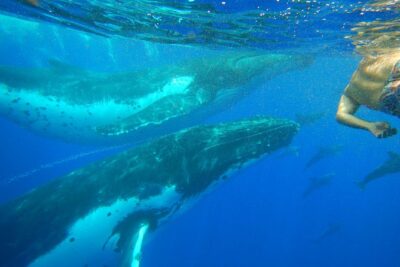
Private tour observing and swimming with humpback whales in Moorea
Read our review →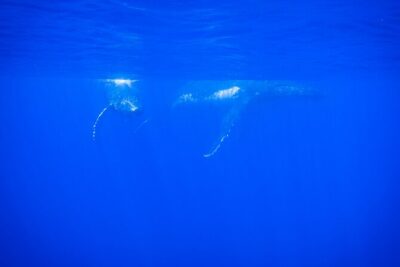
Browse the lists this tour appears in